
How Sunscreen Is Tested (And Why It Matters More Than You Think)
Most of us assume that all sunscreens are tested in the same way. You pick up a bottle labelled SPF 30 or SPF 50, apply it, and trust that it will do what it says.
But behind that number is a testing process, and not all testing methods are the same.
Understanding how sunscreen is tested can help you make more informed choices, especially when it comes to protecting your skin and your family. Whether you're choosing mineral sunscreen for sensitive skin or comparing different SPF ratings, knowing what those numbers actually mean makes all the difference.
What Does SPF Actually Mean?
SPF stands for Sun Protection Factor. It measures how well a sunscreen protects your skin from UVB rays, which cause sunburn.

|
How SPF is defined: This only holds when sunscreen is applied correctly and in sufficient amounts. In practice, what matters is UV blocked: That may look like a small difference. |
According to the British Association of Dermatologists, no sunscreen can block 100% of UV rays, which is why reapplication every two hours remains essential regardless of SPF level.
However, the number itself is only meaningful if the testing behind it is reliable.
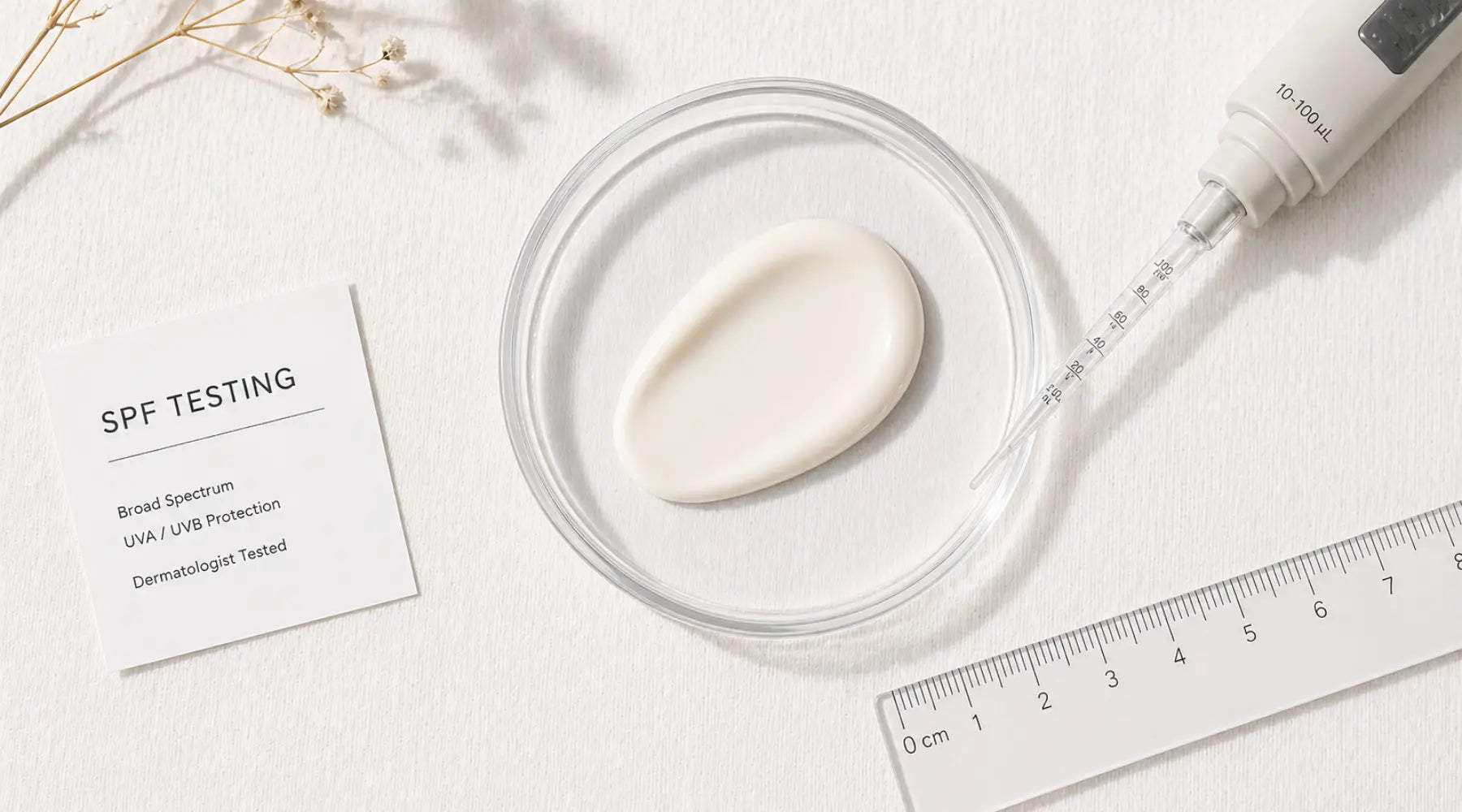
How Is Sunscreen Tested?
There are two main methods for determining SPF and UVA ratings, each measuring a different type of protection.
1. In Vivo Testing (On-Skin Testing) — SPF/UVB Protection
This is the mandatory method for determining the SPF rating on sunscreen products sold in the UK and EU, governed by ISO 24444:2019/Amd.1:2022.

|
The in vivo testing process typically involves:
|
This approach reflects how sunscreen behaves under real conditions, accounting for factors like skin texture, absorption, and application. The SPF number on the label is a direct result of this process.
2. In Vitro Testing (Laboratory Testing) — UVA Protection
For UVA protection, the mandatory method in the UK and EU is in vitro testing, governed by ISO 24443:2021.

|
Key characteristics of in vitro testing:
|
UVA rays penetrate deeper into the skin and contribute to premature ageing and skin damage. In vitro testing is the established standard for assessing how well a sunscreen filters these rays.
Why Are There Different Testing Methods?
The two methods exist because SPF (UVB protection) and UVA protection behave differently, and each requires a different approach to measure accurately.
In the UK and EU, both tests are mandatory:
- SPF (UVB) → ISO 24444:2019/Amd.1:2022 → in vivo testing on human volunteers
- UVA → ISO 24443:2021 → in vitro laboratory testing
Both tests must be completed before a sunscreen can make protection claims on the pack. Together, they provide a full picture of a product's broad-spectrum performance.
Regulatory frameworks in other regions may differ in how they classify sunscreens and which specific methods they require, but the underlying goal is the same: ensuring that the protection on the label reflects how a product performs in real-world use.
Why This Matters for You
For most people, sunscreen is about one simple thing: Can I trust that it will protect my skin when I need it most?
Testing plays an important role in answering that question.
Understanding testing methods helps you:
-
Make informed purchasing decisions based on how products are evaluated
-
Understand performance claims and what they're based on
-
Choose appropriate protection for different scenarios (daily use vs extended sun exposure)
-
Build confidence in the SPF rating you see on the label
In vivo testing on human skin determines the SPF number on your sunscreen. In vitro laboratory testing is used to verify UVA protection. Both are required, and both matter.
A Simple Way to Think About Testing Methods
You can think of sunscreen testing like this:
-
In vivo testing (ISO 24444) determines the SPF rating: how well the formula protects against UVB rays that cause sunburn, tested on human skin
-
In vitro testing (ISO 24443) determines UVA protection: how well the formula filters the deeper-penetrating rays that contribute to skin ageing, tested in a laboratory
Both are mandatory in the UK and EU. Together, they confirm that a sunscreen is doing what the label says.
What About UVA Protection?
Whilst SPF measures UVB protection (sunburn), UVA protection is equally important. UVA rays penetrate deeper into the skin and contribute to premature ageing and skin damage.
Look for these indicators of broad-spectrum protection:
-
UVA star rating (UK system, typically shown as a circle with stars)
-
PA rating (used in some markets, indicated by + symbols)
-
"Broad spectrum" claim on the label
The British Association of Dermatologists recommends choosing sunscreens that offer both UVA and UVB protection for comprehensive skin defence.
Beyond the Testing: Application Matters
Even the most rigorously tested sunscreen won't provide adequate protection if it's not applied correctly.

|
Remember these application principles:
Don't forget commonly missed areas like ears, backs of hands, and feet. |
Research published in the Journal of the American Academy of Dermatology found that most people apply only 25-50% of the recommended amount, which significantly reduces the level of protection achieved.
The Bigger Picture
SPF numbers are important, but understanding how they're determined can give you greater confidence in the products you choose for yourself and your family.
As awareness around sun protection continues to grow, more people are looking beyond just the number on the label and asking deeper questions about performance, reliability, and trust.
And that's a good thing.
The conversation around sunscreen is shifting from simply meeting regulatory requirements to understanding how products perform in real-world use, where application, environment and consistency all play a role.
What's Next
Now that you understand how sunscreen is tested, the real question is: how does this translate to everyday protection?
Not all SPF claims behave the same in real-world conditions. Application, environment, and formulation all play a role in how your skin is actually protected.
In an upcoming article, we’ll explore how various testing methods stack up and what that could mean for your everyday routine.
Or explore our Performance Suncare Collection, designed with real-world sun exposure in mind.
Sources
- British Association of Dermatologists. Sun protection and sunscreen guidelines.
- Skin Cancer Foundation. Sun Protection Factor (SPF).
- European Commission. Cosmetics Regulation (EC) No 1223/2009 and sunscreen recommendations.
- Journal of the American Academy of Dermatology. Studies on sunscreen application and photoprotection.
- ISO 24444:2019/Amd.1:2022. Cosmetics — Sun protection test methods — In vivo determination of the sun protection factor (SPF).
- ISO 24443:2021. Cosmetics — Sun protection test methods — In vitro determination of sunscreen UVA photoprotection.
#SunscreenTesting #SPFExplained #HowSPFWorks #SunscreenScience #SPFTesting #UVAProtection #UVBProtection #BroadSpectrum #MineralSunscreen #SunProtection #SensitiveSkin #ReactiveSkin #SkincareForSensitiveSkin #CleanSunscreen #VeganSunscreen #CrueltyFreeSunscreen #ISO24444 #ISO24443 #ZincOxide #MineralSPF #CleanBeauty #BotanicalSkincare #SkincareEducation #KnowYourSkincare #SkincareIngredients #SkincareRoutine #SkincareTips #SuncareTips #DailySPF #SPF50 #SunAwareness