
Article: How to Read a Sun Care Ingredient Label (So the Claims Actually Make Sense)
How to Read a Sun Care Ingredient Label (So the Claims Actually Make Sense)
You have read about a particular UV filter, perhaps one you want to look for, perhaps one you would rather avoid. You pick up a sunscreen in a UK shop, turn it over, and the name is nowhere to be seen. It is simply listed under a name you have never been told.
The name you know may not be the name on the label
Much of what you read online about sunscreen uses US common names, such as avobenzone or oxybenzone. On UK and EU packaging, the same filters appear under their official INCI names, which can look entirely different. If you are looking for, or choosing to avoid, a particular UV filter, you need to know its INCI name.
| YOU MAY KNOW IT AS | ON A UK OR EU LABEL | TYPE |
| Avobenzone | Butyl Methoxydibenzoylmethane | Organic (UVA) |
| Oxybenzone | Benzophenone-3 | Organic (UVB and some UVA) |
| Octinoxate | Ethylhexyl Methoxycinnamate | Organic (UVB) |
| Octisalate | Ethylhexyl Salicylate | Organic (UVB) |
| Tinosorb S | Bis-Ethylhexyloxyphenol Methoxyphenyl Triazine | Organic (UVA and UVB) |
| Tinosorb M | Methylene Bis-Benzotriazolyl Tetramethylbutylphenol | Organic (UVA and UVB) |
| Zinc oxide | Zinc Oxide | Mineral (UVA and UVB) |
| Titanium dioxide | Titanium Dioxide | Mineral (mainly UVB, some UVA) |
To use the table on a shopping trip:
1. Find the common name of the filter you have read about.
2. Note its INCI name, or save this table to your phone.
Note: In UK and EU cosmetics, ingredients present above 1% are listed in descending order. Ingredients at 1% or below may appear in any order after those. UV filters are often present at lower concentrations and may sit anywhere in the list.
3. Check the full ingredient list, not just the first few lines, as UV filters may appear further down.
4. If a filter is not listed here, search its name in the European Commission's CosIng database, which records INCI names for cosmetic ingredients. Mineral filters are straightforward: zinc oxide and titanium dioxide carry the same name in everyday use and on the label. If the nano form is used, UK and EU rules require "(nano)" to appear after the ingredient name, so a filter listed without it is not in nano form.
Mineral and organic filters: what the label tells you
Both types protect skin by absorbing UV radiation. The difference lies in what they are made of and how they behave on the skin.
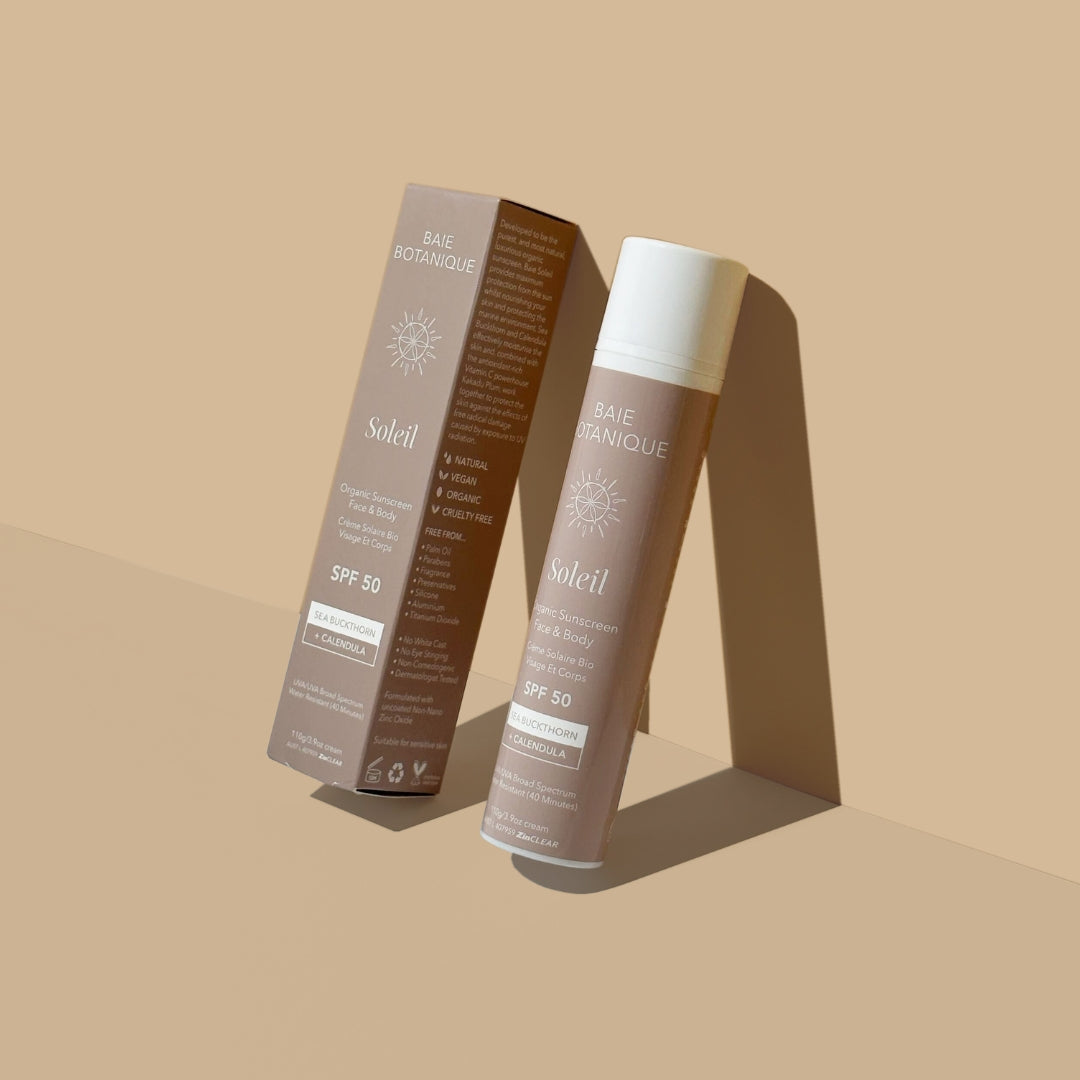
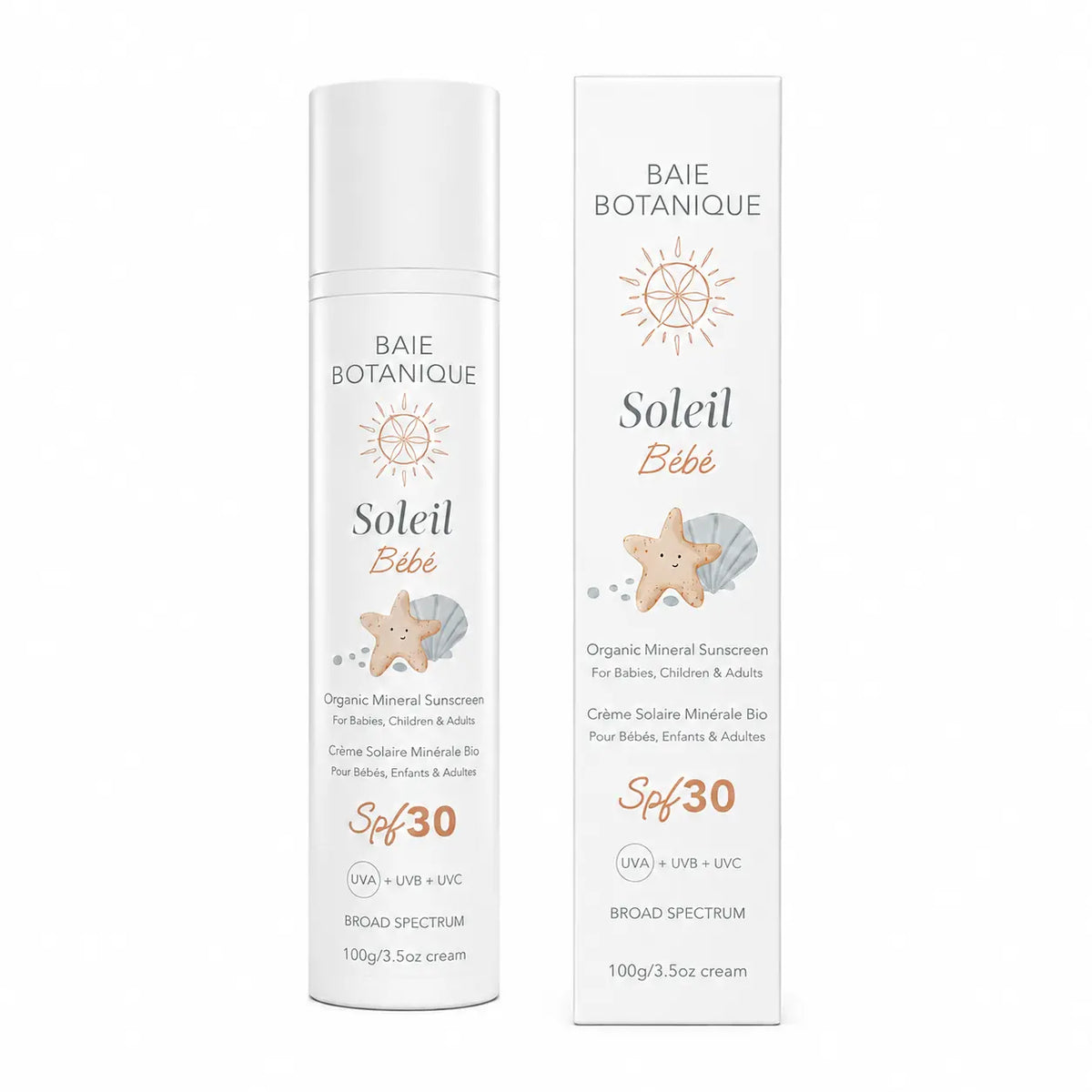
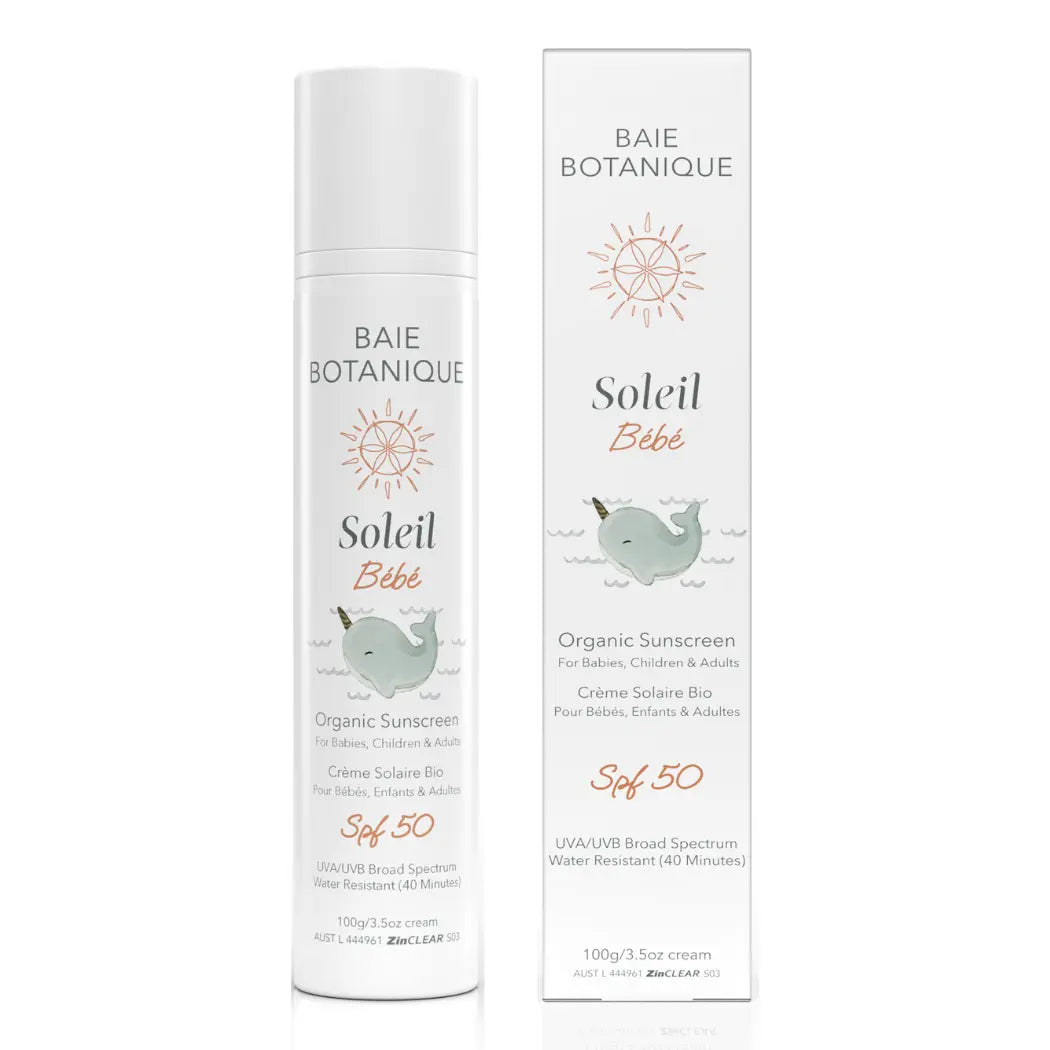
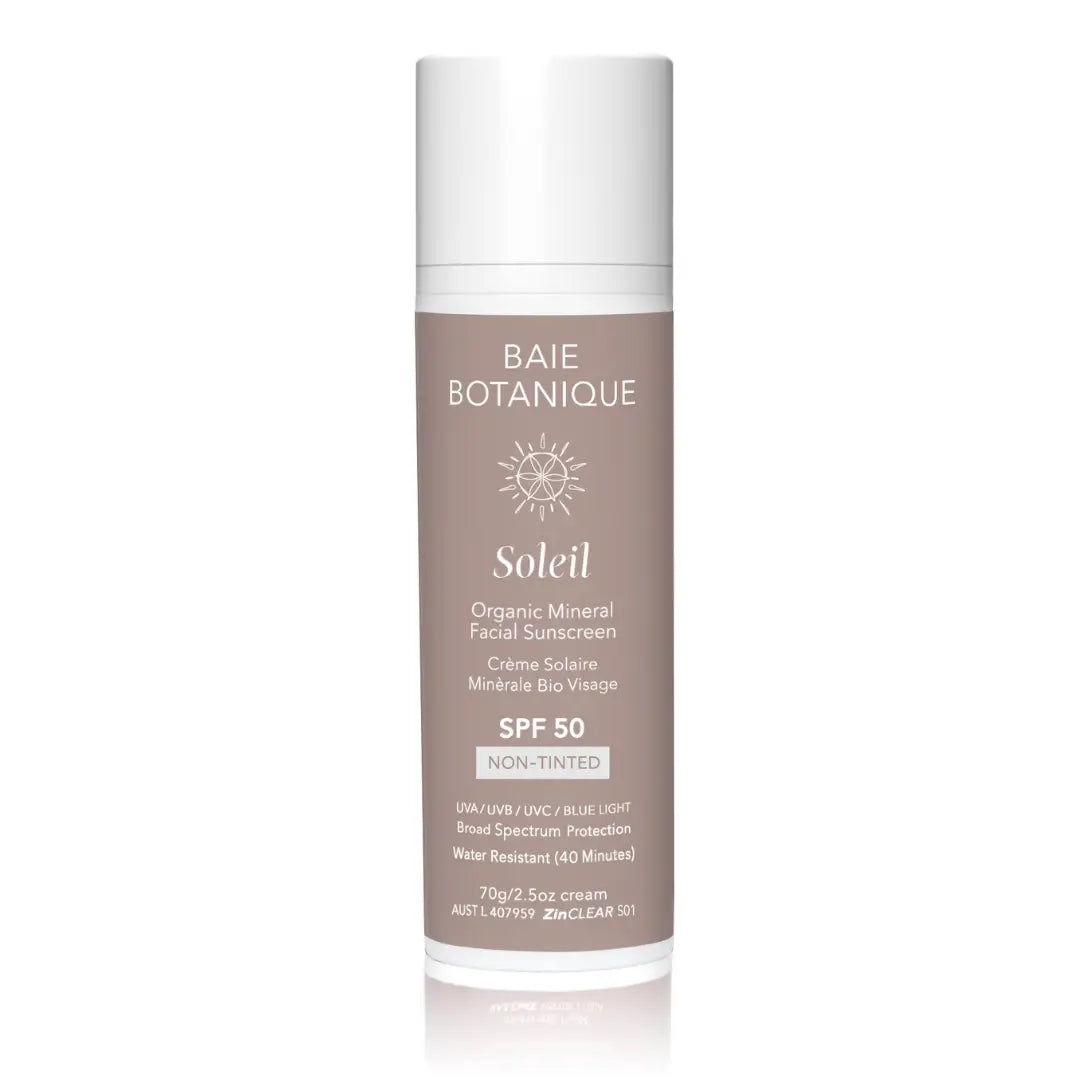
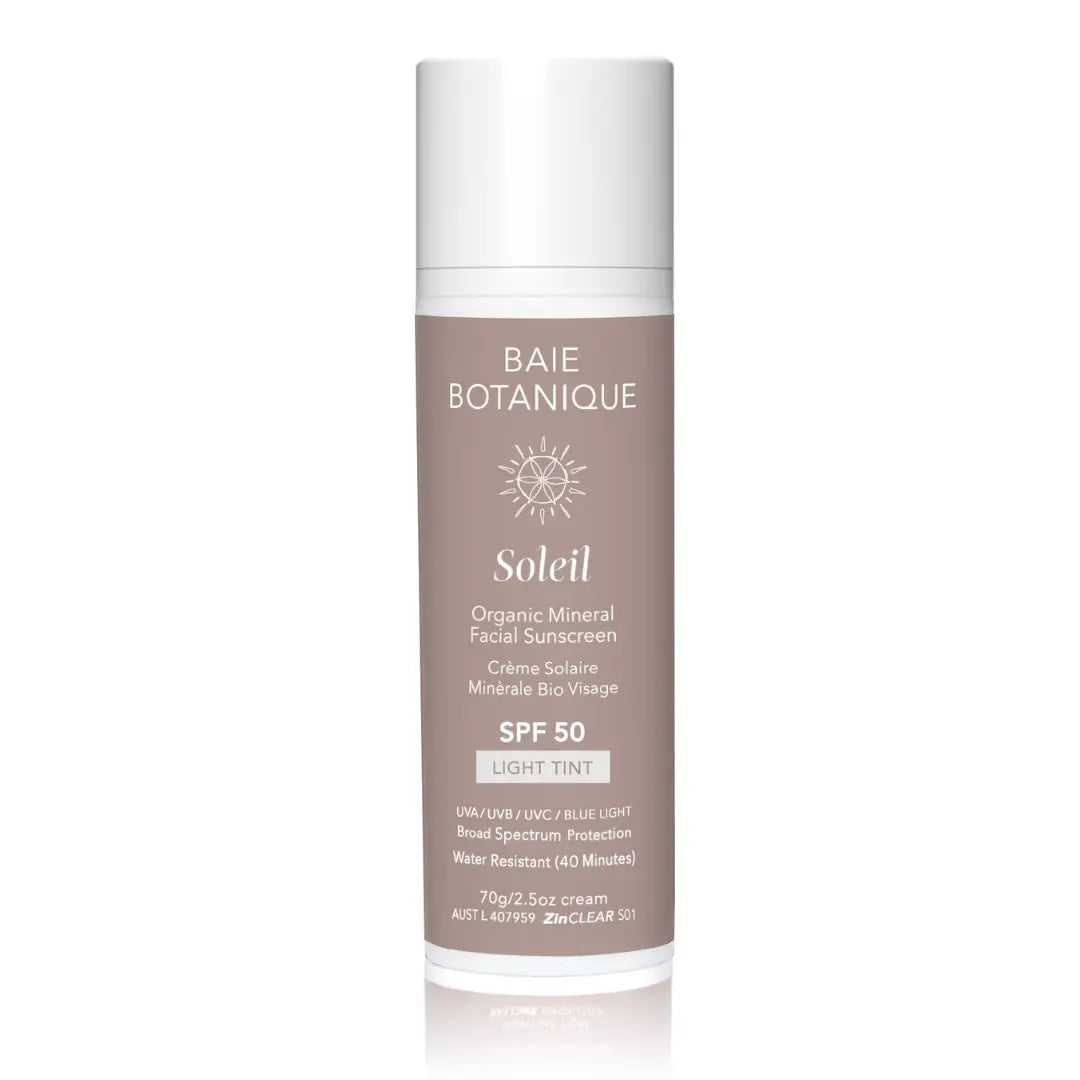
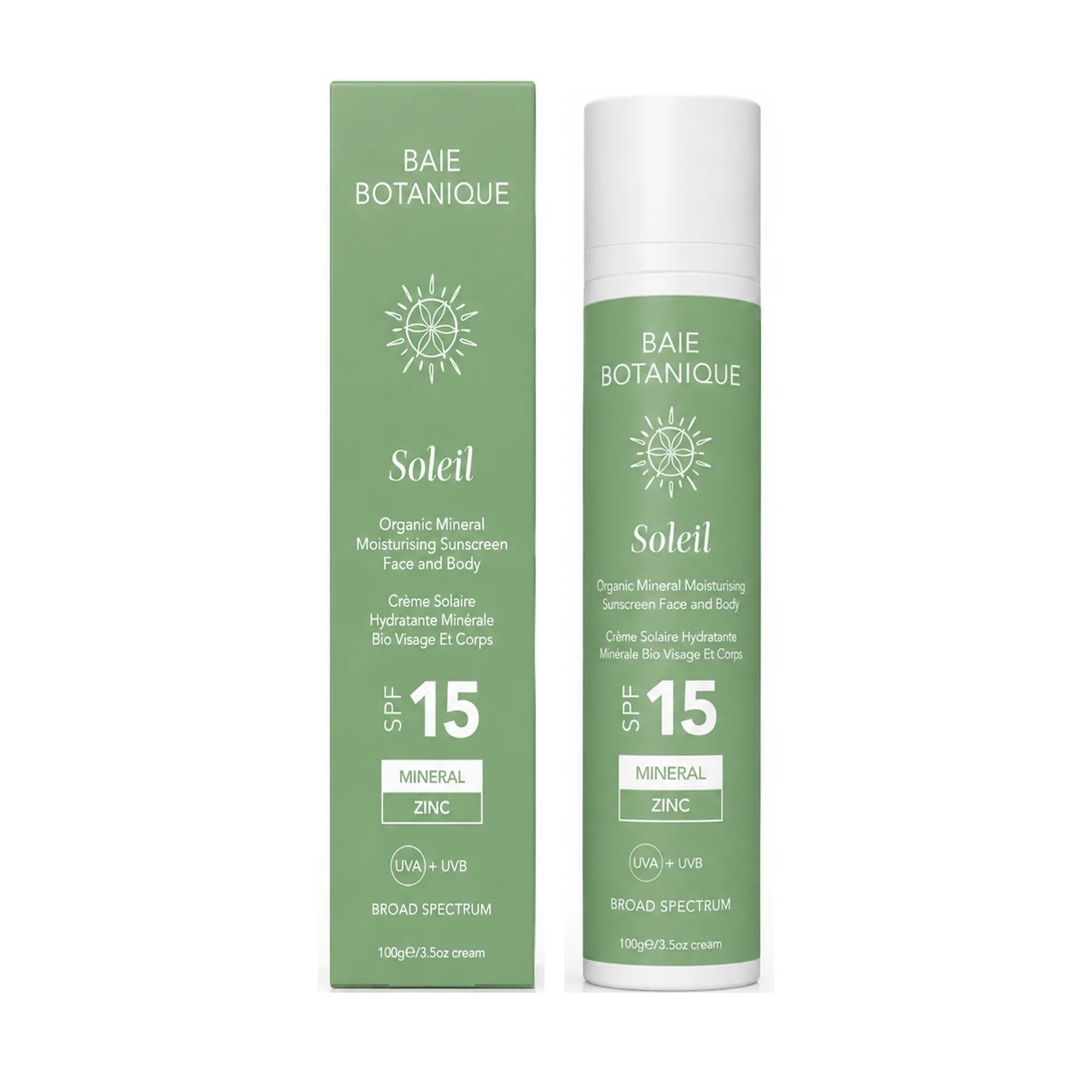
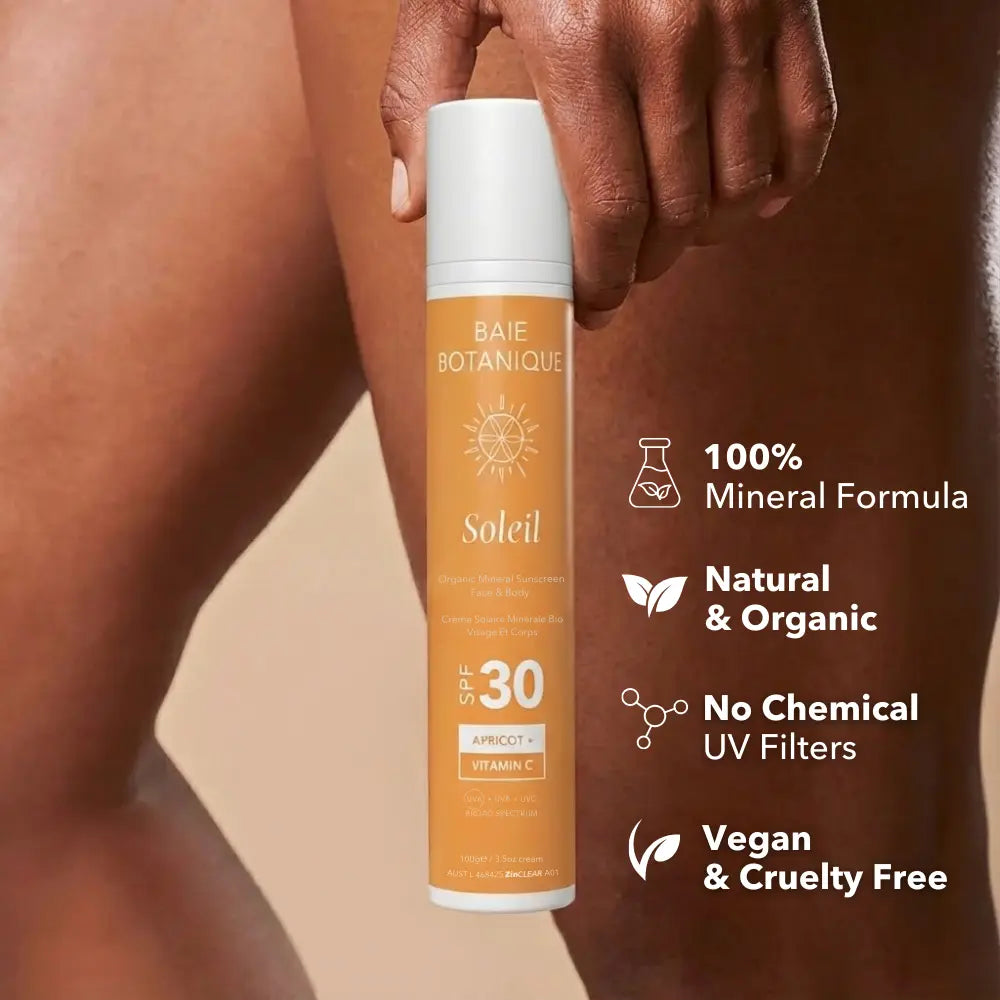
Mineral filters (Zinc Oxide, Titanium Dioxide) protect mainly by absorbing UV, with some also scattering or reflecting it. Non-nano zinc oxide stays primarily on the skin's surface and in its outermost layers, rather than being significantly absorbed. Zinc oxide covers UVA and UVB wavelengths, but testing the finished formula determines any product's actual protection. Non-nano zinc oxide is the UV filter in our Soleil mineral sunscreens.
Organic filters are carbon-based molecules that absorb UV energy and release it as a very small amount of heat. Each covers a different part of the UV range, so formulas often combine several for broad coverage, and they can be made in a wide range of textures.
Both approaches are approved and effective. The right choice depends on your skin, your preferences, and how you plan to use the product.

The numbers on the front: SPF and UVA
SPF measures protection against UVB only. UVA is shown separately, usually with the UVA circle logo, meaning UVA protection is at least one-third of the SPF value. Some products also carry a PA rating, a Japanese UVA grading system.
| SPF | UVB FILTERED (APPROX.) | UVB REACHING SKIN (APPROX.) |
| 30 | 97% | 3% |
| 50 | 98% | 2% |
The headline percentages look close, but the more useful comparison is what gets through: SPF 50 lets through around 40% less UVB than SPF 30. For fair or sensitive skin, high UV or long spells outdoors, that difference is worth taking seriously.
Both figures assume the tested amount of about 2mg per cm², which is more than most people apply. Applying generously and reapplying regularly matters at any SPF.
Claims to understand and claims to question
Some sun care claims rest on standardised testing. Others are marketing language with no agreed definition. Claims without a specific definition must still be truthful, substantiated, and not misleading under UK and EU consumer protection and cosmetics law.
|
CLAIM |
WHAT IT MEANS |
DEFINED STANDARD OR MEANING? |
|
SPF [number] |
UVB protection measured by a standardised test method |
Yes |
|
UVA circle logo |
UVA protection is at least one-third of the SPF value |
Yes |
|
Water resistant |
Protection measured after set periods in water. Not the same as waterproof. |
Partly: the claim must be backed by evidence, using industry test methods |
|
Broad spectrum |
Describes UVA and UVB coverage |
Partly: no separate legal definition in the UK or EU; the UVA circle is the recognised indicator |
|
Reef safe |
No agreed definition; claims vary between brands. Any claim made must still be truthful and substantiated. |
No |
|
Natural/clean/ |
No legal definition; the ingredient list is the better guide. Any claim made must still be truthful and substantiated. |
No |

The rest of the label
- PAO (Period After Opening): the open-jar symbol with several months shows how long the product can be used safely once opened. It does not guarantee that tested sun protection lasts exactly that long, and storing sunscreen in a hot place, such as a beach bag or car, can shorten its useful life.
- Fragrance: listed as "parfum" or "aroma". Certain fragrance allergens above set concentrations must also be listed individually by INCI name, such as Limonene or Linalool.
- Preservatives: listed individually by INCI name, for example Phenoxyethanol or Sodium Benzoate.
This habit extends well beyond sun care. Once INCI names feel familiar, the ingredient list on almost anything in your bathroom cabinet becomes easier to read.
In short
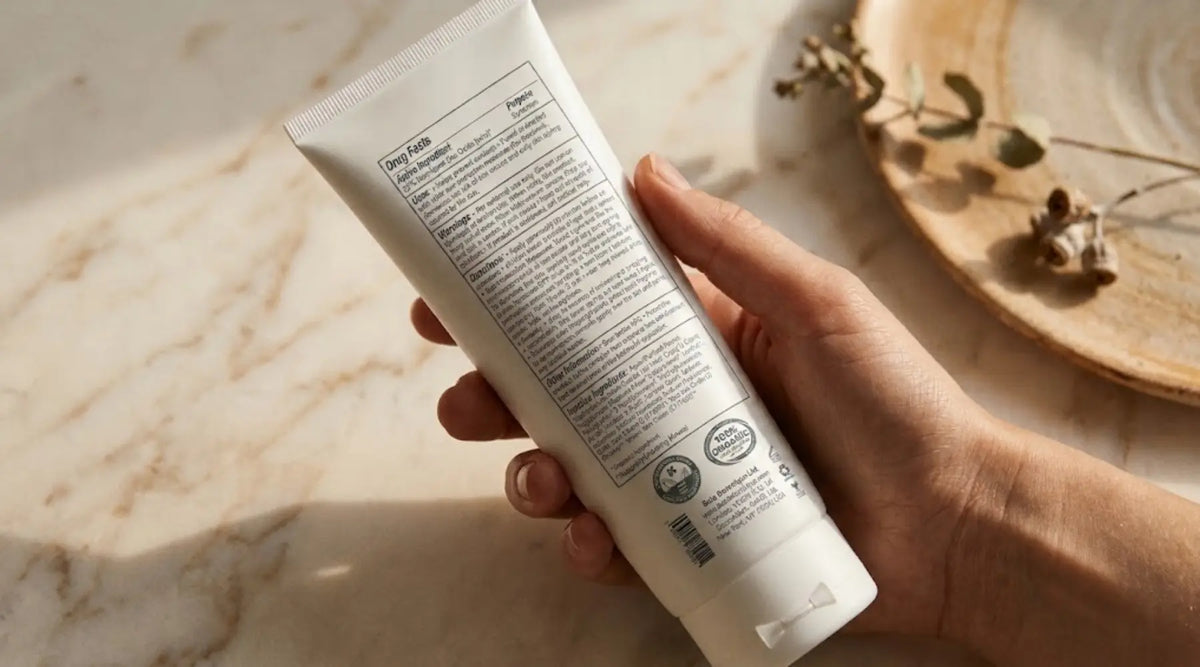
Before relying on a claim on the front, turn the bottle over. Check the SPF and the UVA indicator, then look for the UV filters in the ingredient list — they may appear anywhere, so check the full list. If you are searching for a filter you have read about, check its INCI name first: avobenzone will not appear on a UK label as avobenzone, but Butyl Methoxydibenzoylmethane will.
References
Grouped by the section they support. Regulatory and standards sources come first, because they carry the label and claims sections.
Label layout, INCI names and UV filters
- Regulation (EC) No 1223/2009 of the European Parliament and of the Council on cosmetic products. Official Journal of the European Union, L 342, 22.12.2009, p. 59. Article 19 (labelling, INCI ordering and the "(nano)" requirement); Annex III (fragrance allergens requiring individual listing); Annex VI (the list of permitted UV filters, with their INCI names).
- The Product Safety and Metrology etc. (Amendment etc.) (EU Exit) Regulations 2019 (SI 2019/696), Schedule 34: the Cosmetic Products Regulation as it applies in Great Britain. Confirms the same INCI labelling rules for UK products.
- Commission Regulation (EU) 2016/621 amending Annex VI to Regulation (EC) No 1223/2009. Authorises zinc oxide (non-nano and nano) as a UV filter up to 25%. legislation.gov.uk
- European Commission. CosIng: Cosmetic Ingredients database (INCI names and functions).
- Commission Regulation (EU) 2023/1545 amending Annex III to Regulation (EC) No 1223/2009 as regards labelling of fragrance allergens (EU).
- SPF, UVA and claims
- Commission Recommendation 2006/647/EC on the efficacy of sunscreen products and the claims made relating thereto. Official Journal of the European Union, L 265, 26.9.2006, p. 39. Basis for the UVA one-third ratio and claim wording.
- Commission Regulation (EU) No 655/2013 laying down common criteria for the justification of claims used in relation to cosmetic products. Basis for the requirement that claims such as water resistance are substantiated.
- ISO 24444:2019. Cosmetics: Sun protection test methods: In vivo determination of the sun protection factor (SPF).
- ISO 24443:2021. Cosmetics: Determination of sunscreen UVA photoprotection in vitro.
- ISO 16217:2020 and ISO 18861:2020. Cosmetics: Sun protection test methods: water immersion procedure, and percentage water resistance.
How mineral filters work
- Cole, C., Shyr, T. and Ou-Yang, H. (2016). Metal oxide sunscreens protect skin by absorption, not by reflection or scattering. Photodermatology, Photoimmunology & Photomedicine, 32(1), 5-10.
- Schneider, S.L. and Lim, H.W. (2019). A review of inorganic UV filters zinc oxide and titanium dioxide. Photodermatology, Photoimmunology & Photomedicine, 35(6), 442-446. Henry Ford Health
UV background
- Diffey, B.L. (2002). Sources and measurement of ultraviolet radiation. Methods, 28(1), 4-13. Title corrected from the previous draft. Newcastle University