Article: A Sun Care Checklist for Family Holidays Somewhere Sunny
A Sun Care Checklist for Family Holidays Somewhere Sunny
If you are travelling somewhere sunny with the family this half term, or at any point over Christmas, Easter, or summer, sun care often gets treated as obvious: pack the SPF, apply it at the pool, job done. In practice, it is usually more complicated, and the complications tend to show up in the same places. This is a practical guide to getting it right.
The UV picture at your destination
The most common misunderstanding about holidays somewhere sunny is that the UV is broadly comparable to home. Popular family holiday destinations, particularly in the tropics or subtropics, often have considerably higher UV than the UK. UV levels at your destination may differ considerably from those at home. Check the local daily UV forecast before and during your trip.
Temperature and cloud cover don't reliably indicate UV intensity. A pleasant, overcast morning at a sunny destination can still have significant UV. The daily UV forecast gives a far more accurate picture than the weather report alone.
The WHO's Global Solar UV Index Guide provides a useful framework for understanding UV levels by location and season. For more on how UV behaves year-round in the UK and abroad, read our guide.
What to pack
The sun care kit for a sunny family holiday doesn't need to be elaborate, but it should cover the essentials.
THE PACKING CHECKLIST
-
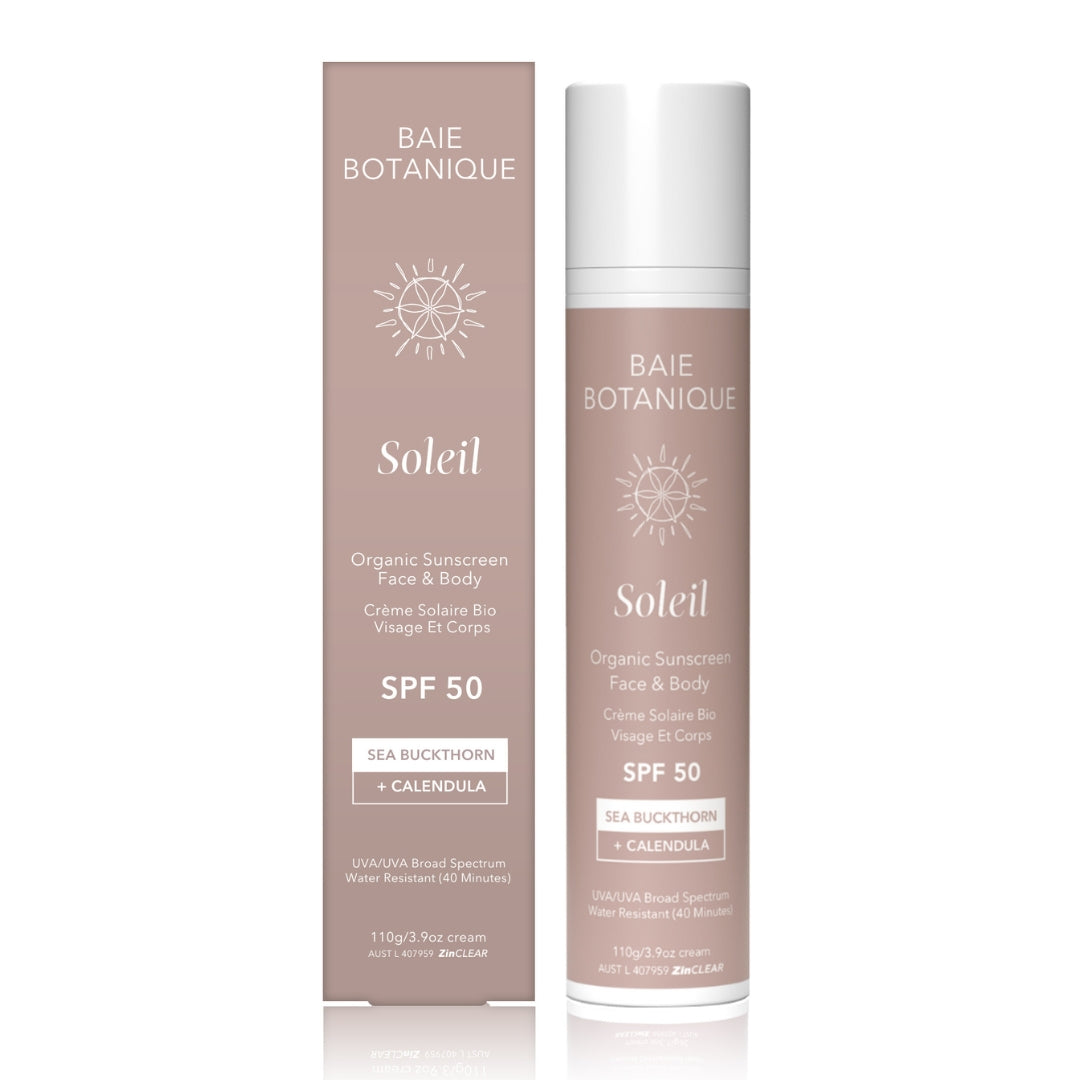
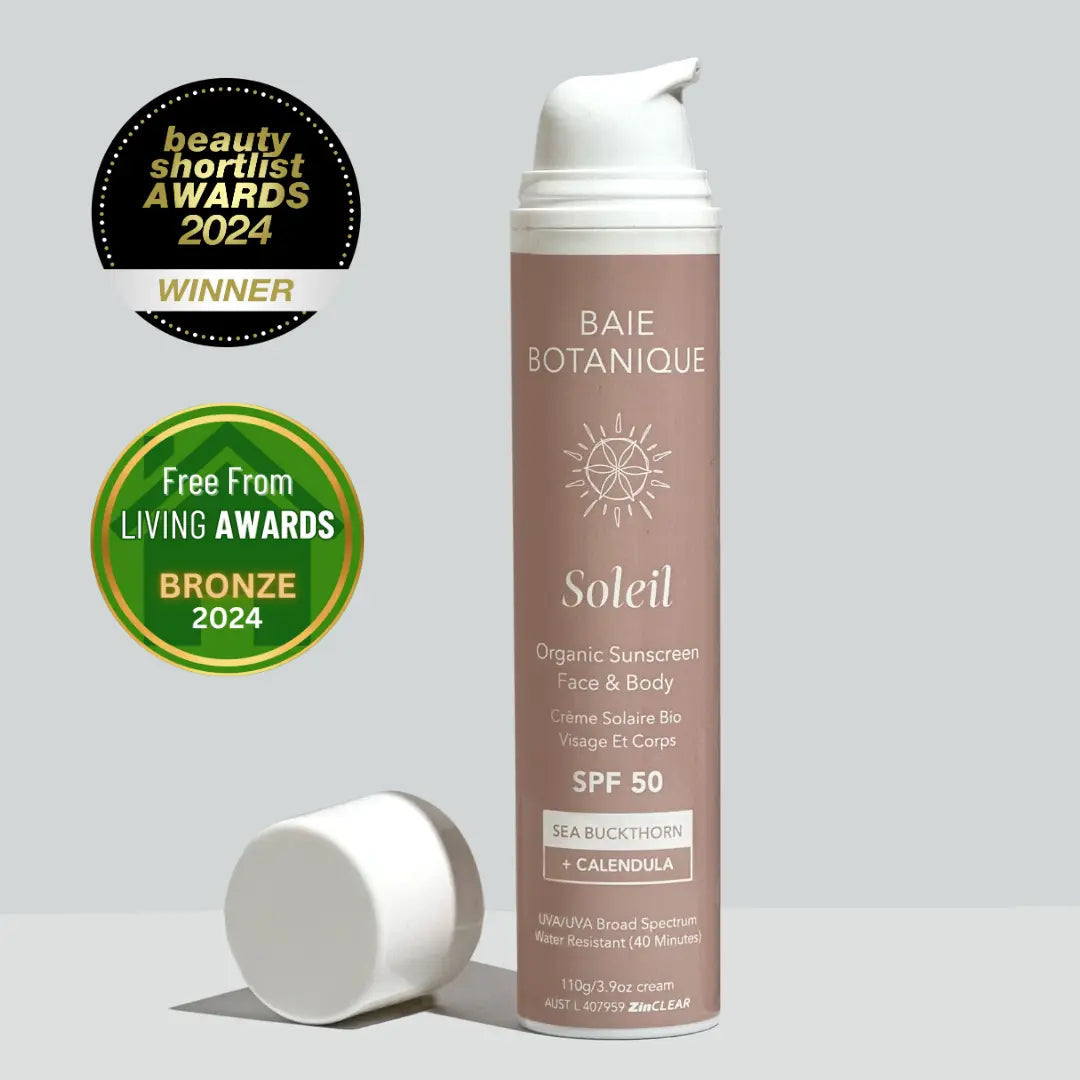
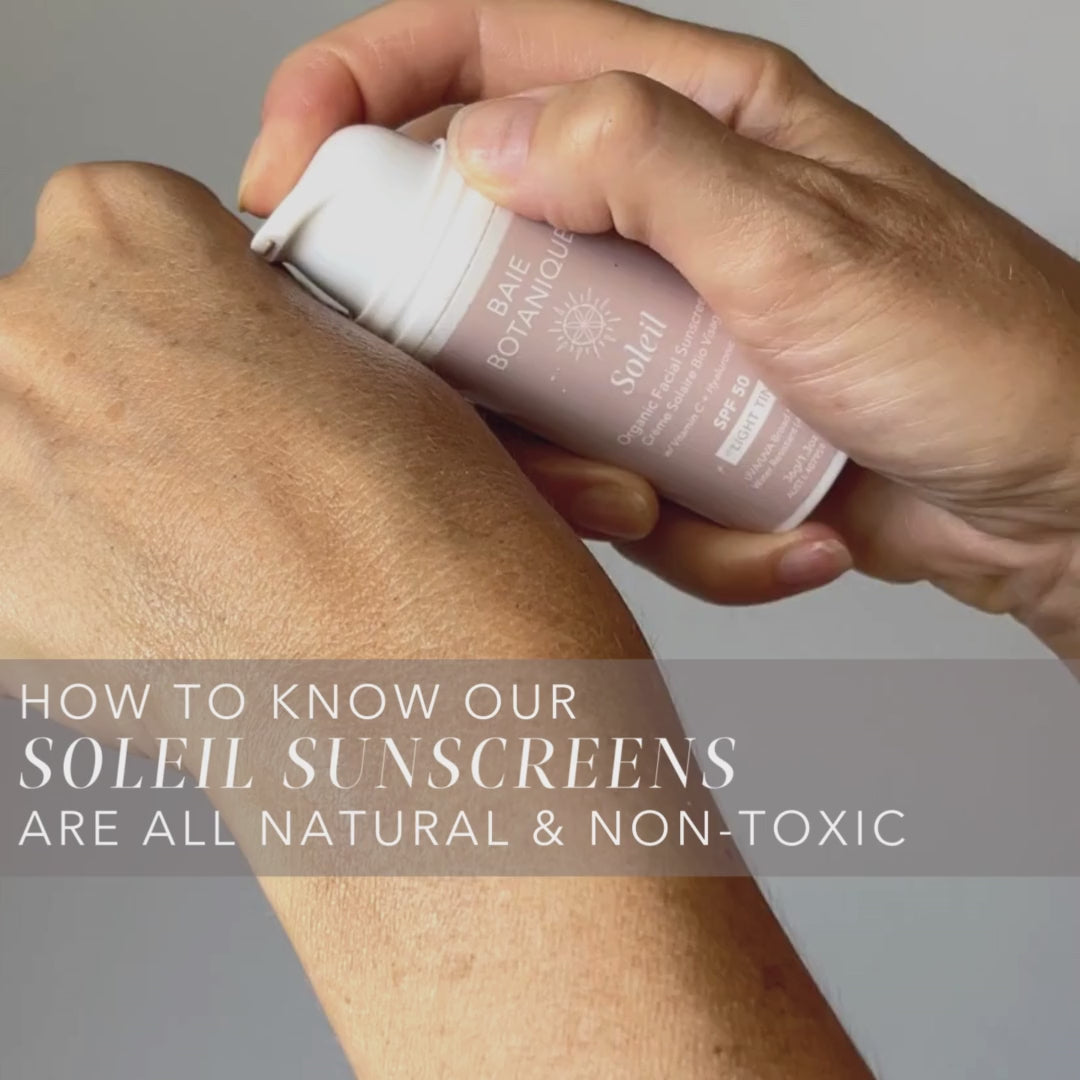
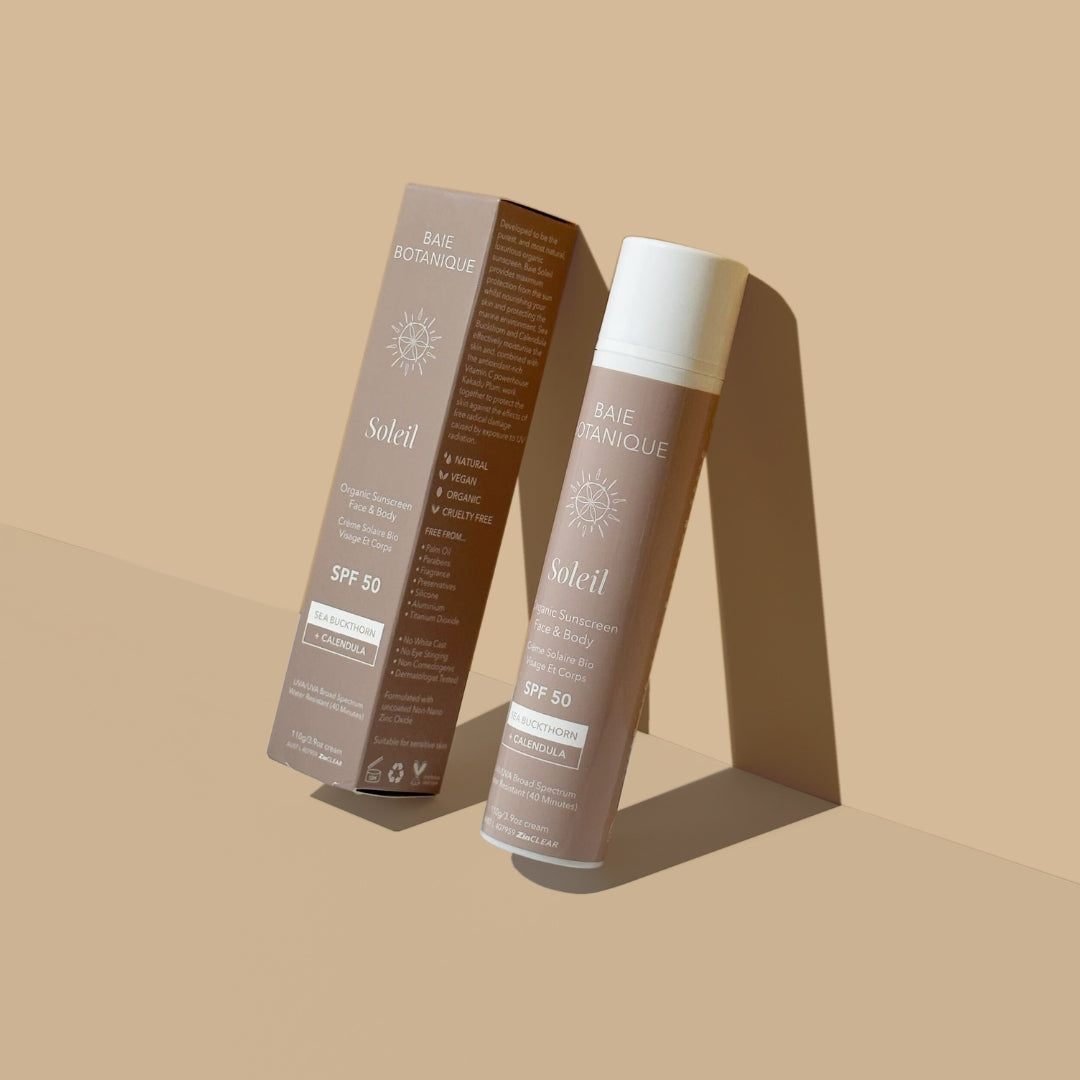
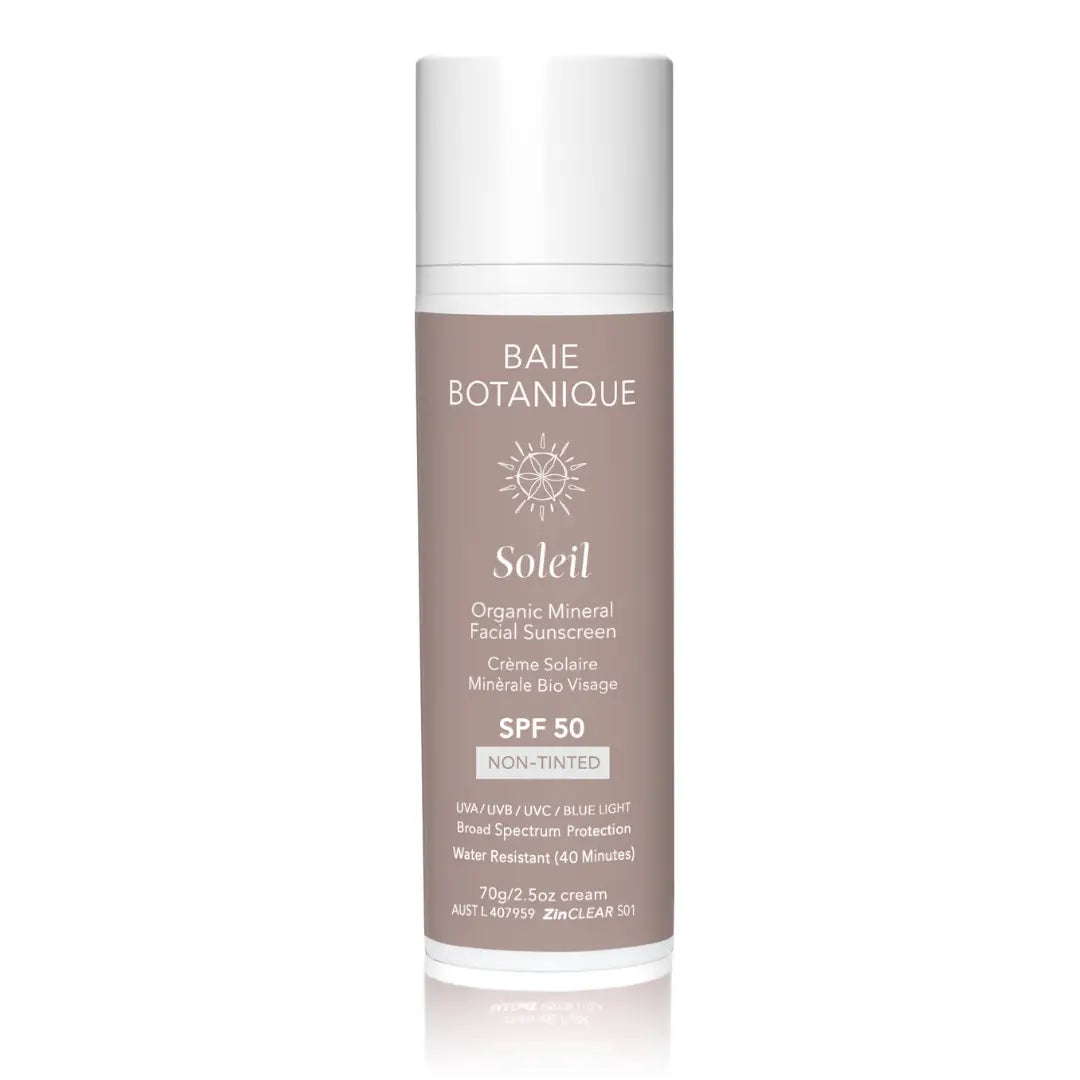
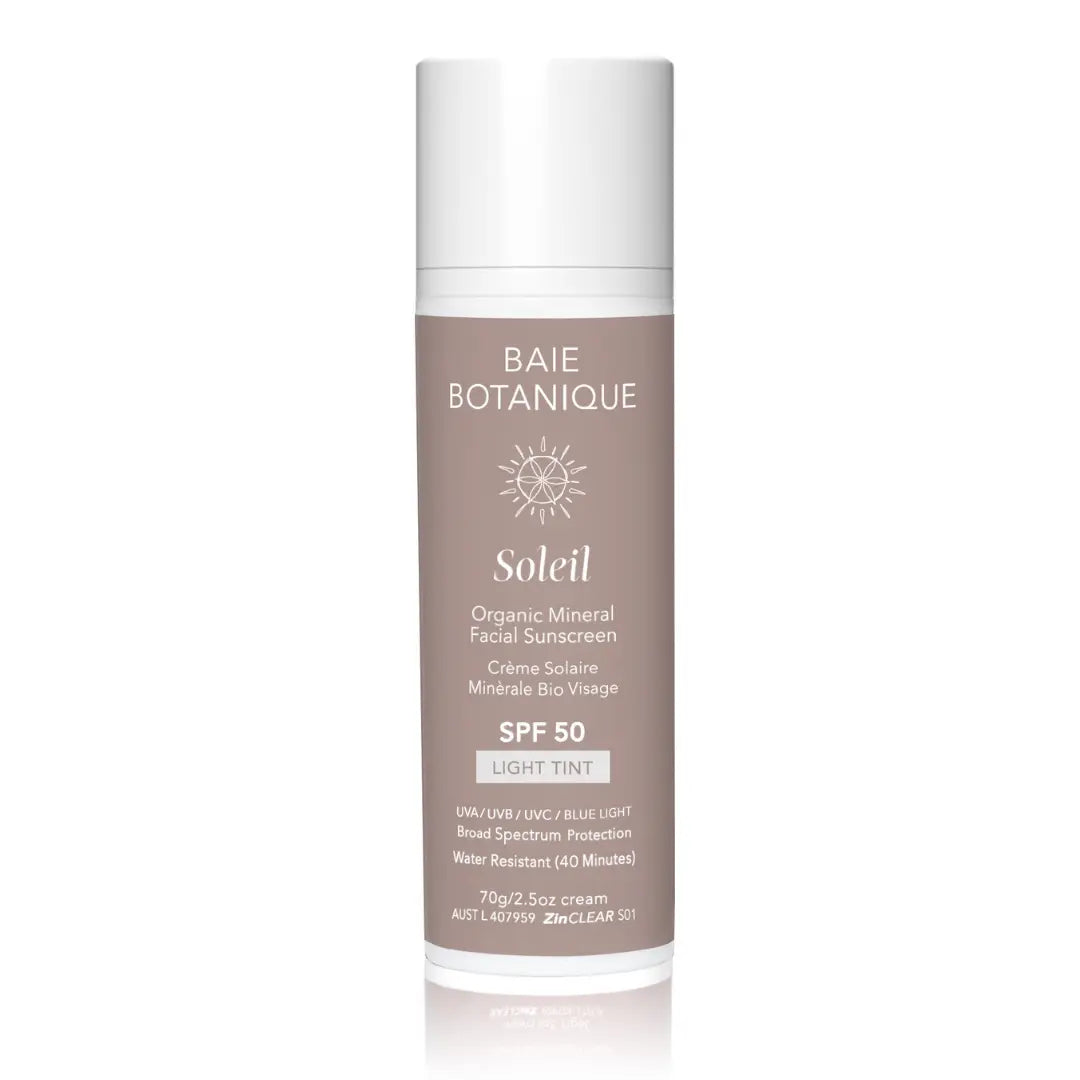
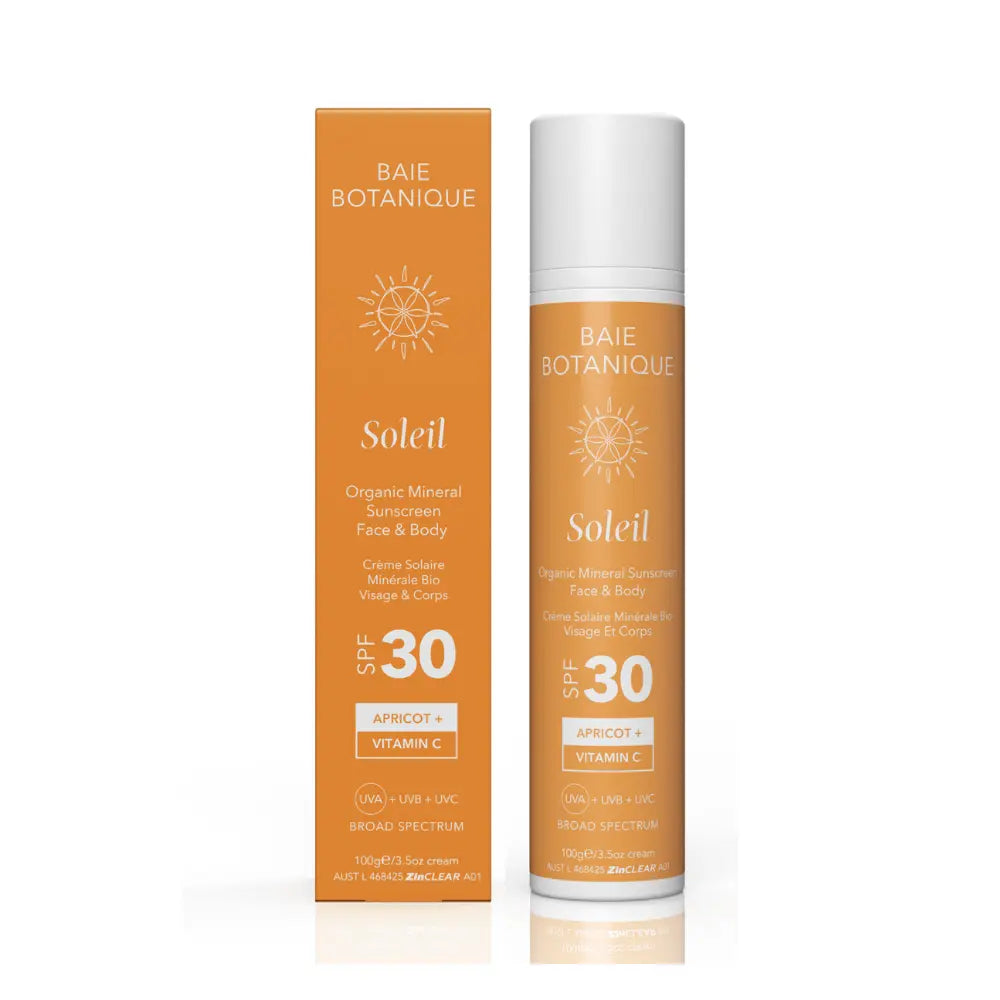
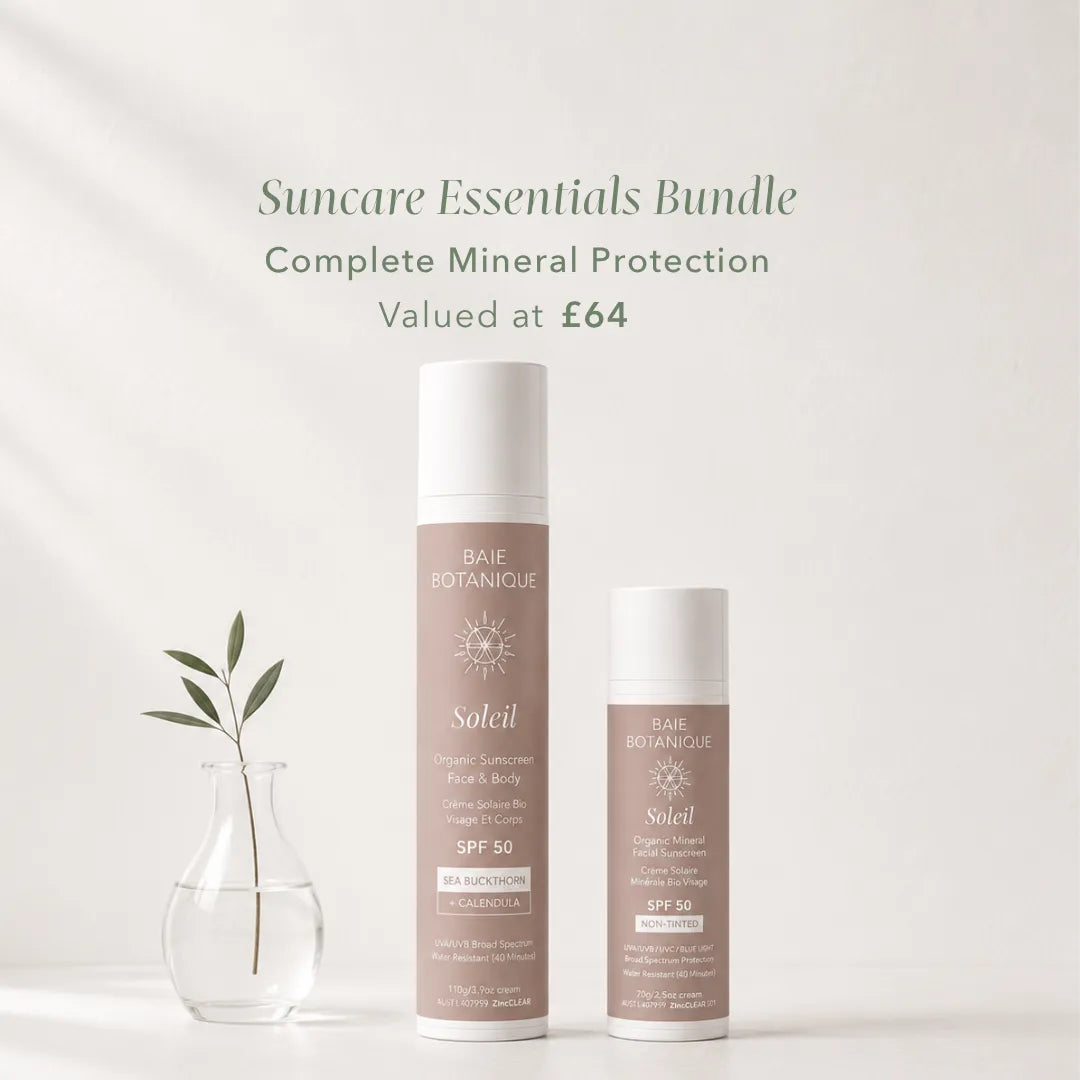
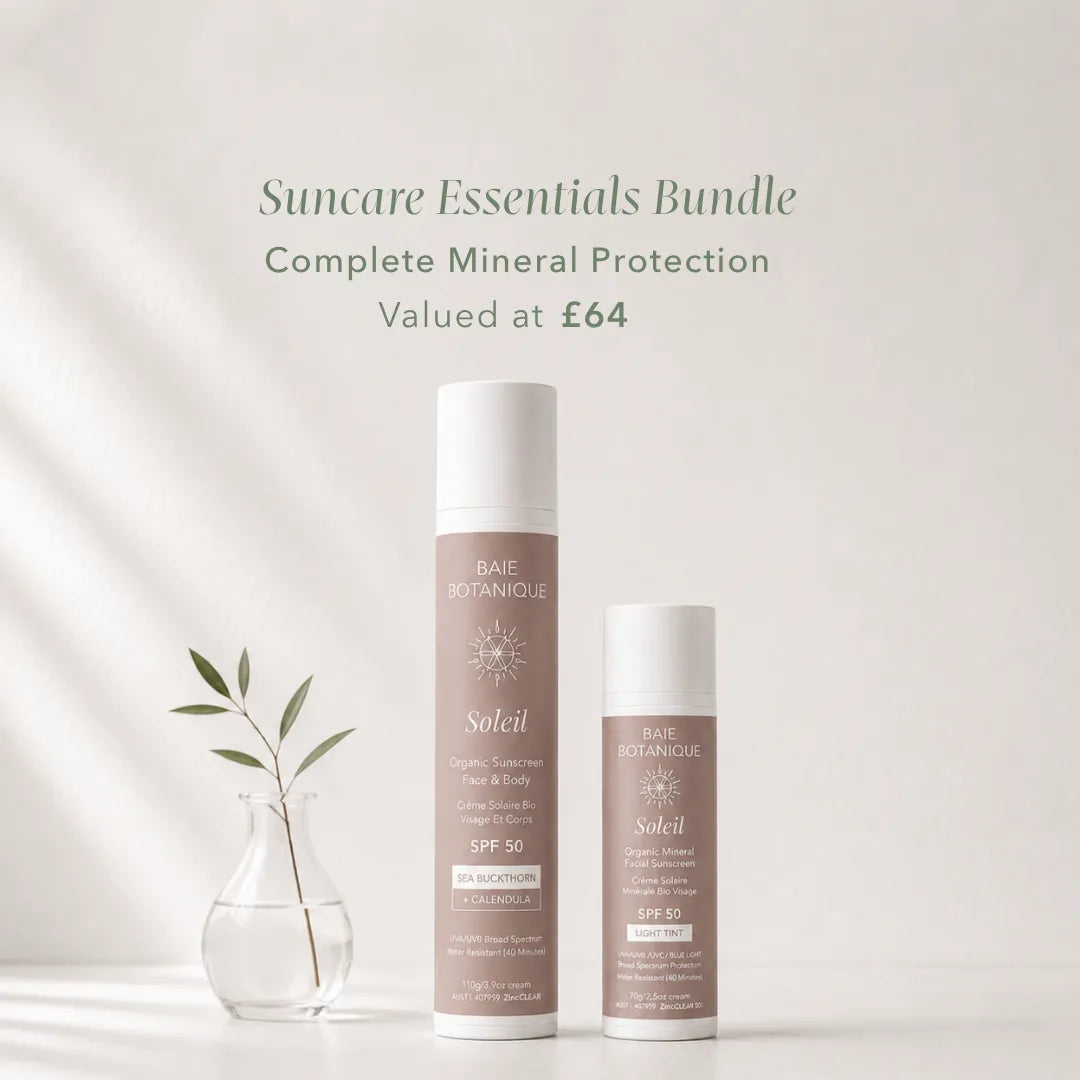
Mineral facial sunscreen SPF 50: for the face, ears, and neck. The Baie Botanique Organic Mineral Facial Sunscreen SPF 50 is the starting point for morning application. Warm it between your fingers before applying.
-
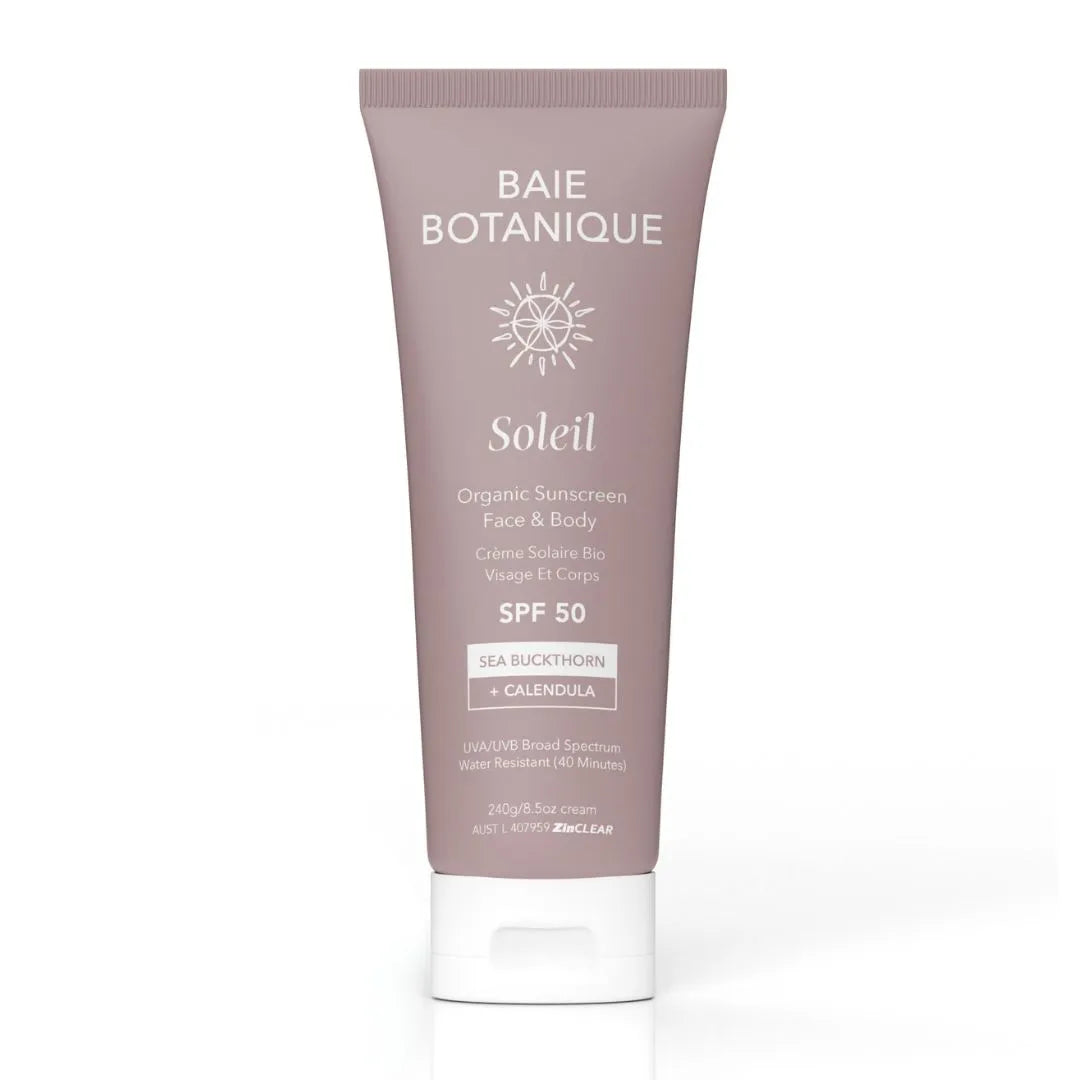
Body Sunscreen: for the beach, pool, and extended time outdoors. Consider how much you will need for the full trip, not just what fits in your weekend bag over summer.
-
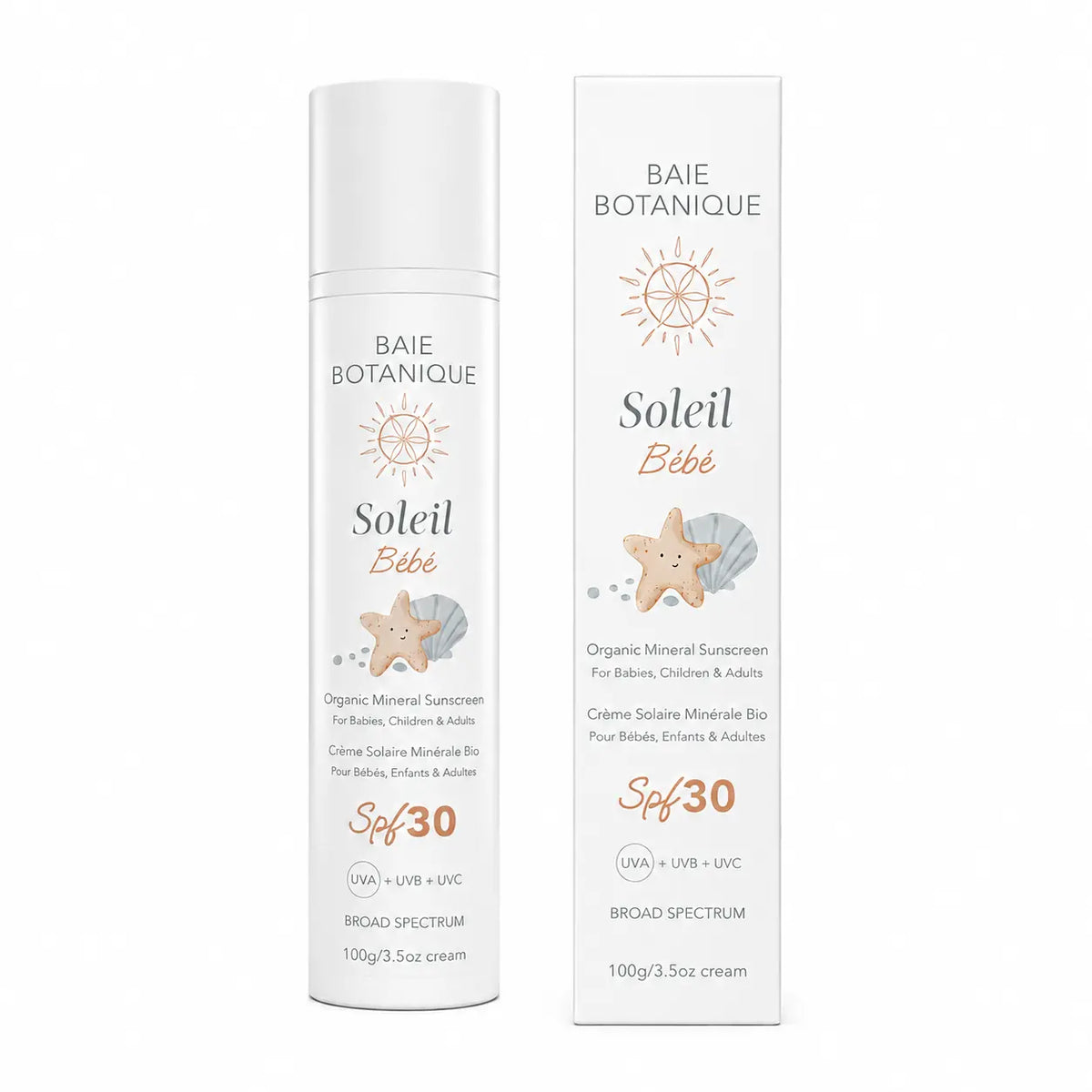
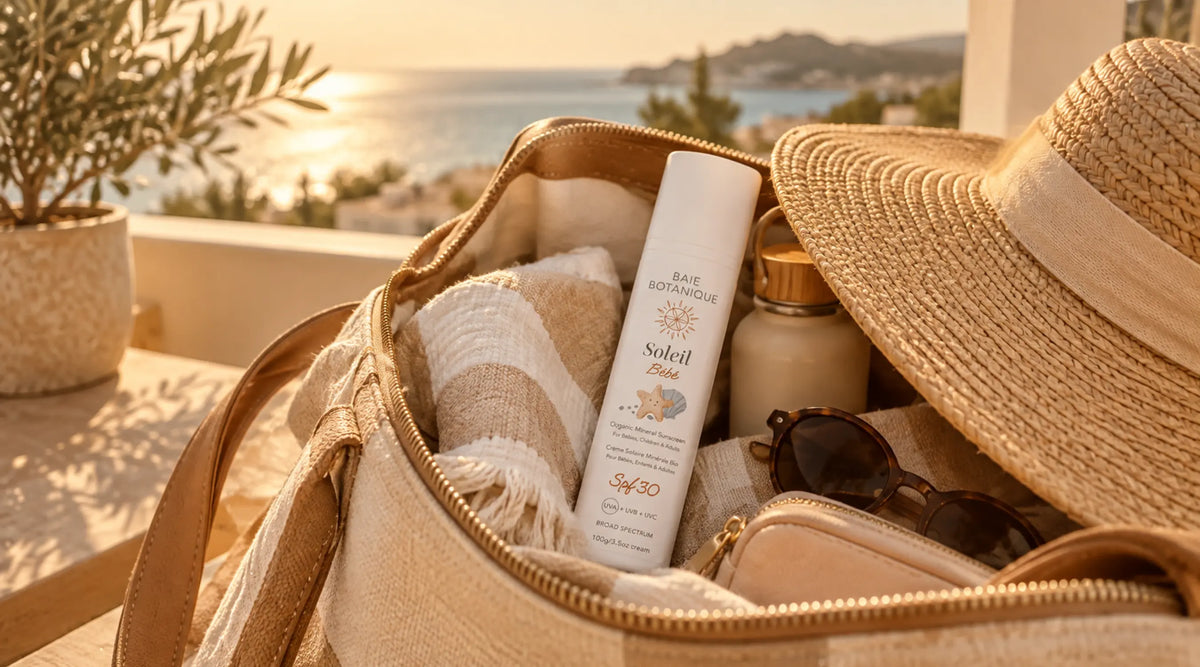
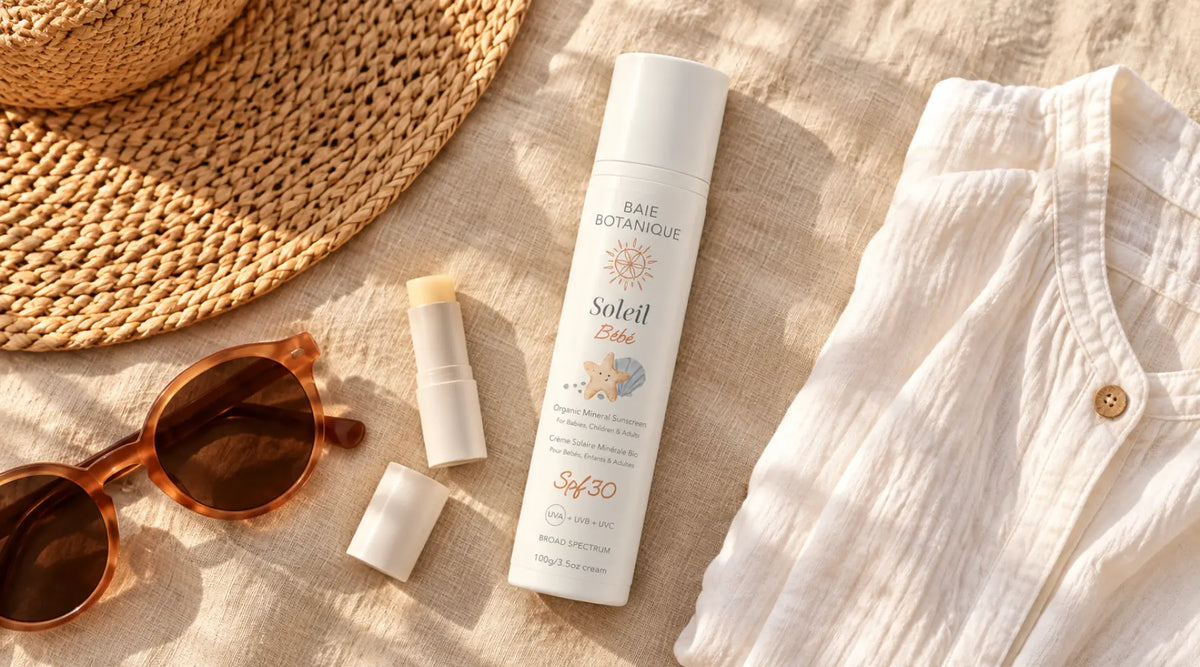
Baby & Children SPF 30 (for daily use): a gentle mineral formula for everyday use on baby and young child skin. Note that it is not water-resistant, so it is not suitable for swimming, heavy sweating, or beach and pool days.
-
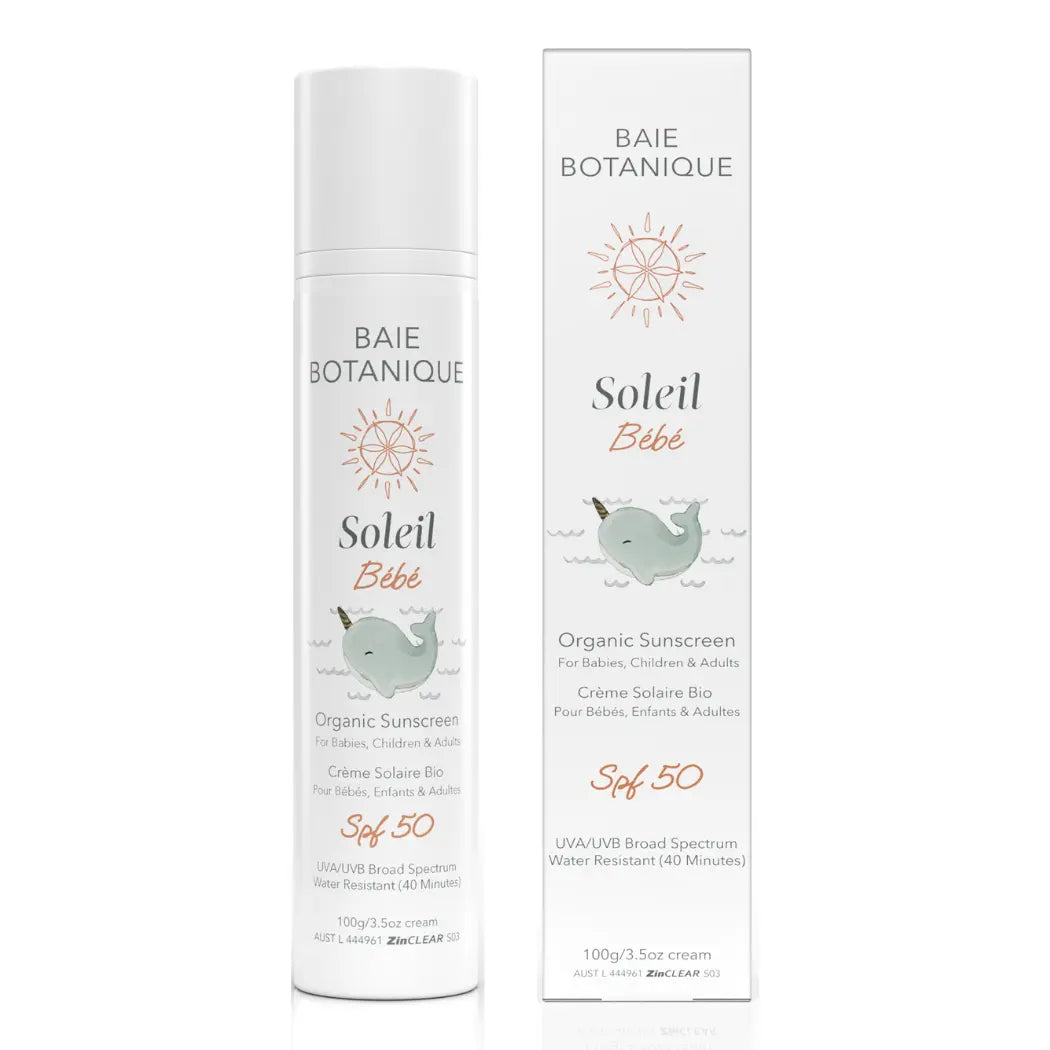
Baby & Children SPF 50 (for beach and pool days): the water-resistant option for swimming, sweating, and extended time in the sun. Reapply after towelling and at least every two hours outdoors. Keep babies under six months out of direct sunlight. Read our guide to sun protection for children on holiday for more detail.
-
A lip balm with SPF: lips are one of the most consistently forgotten areas and among the most UV-sensitive.
-
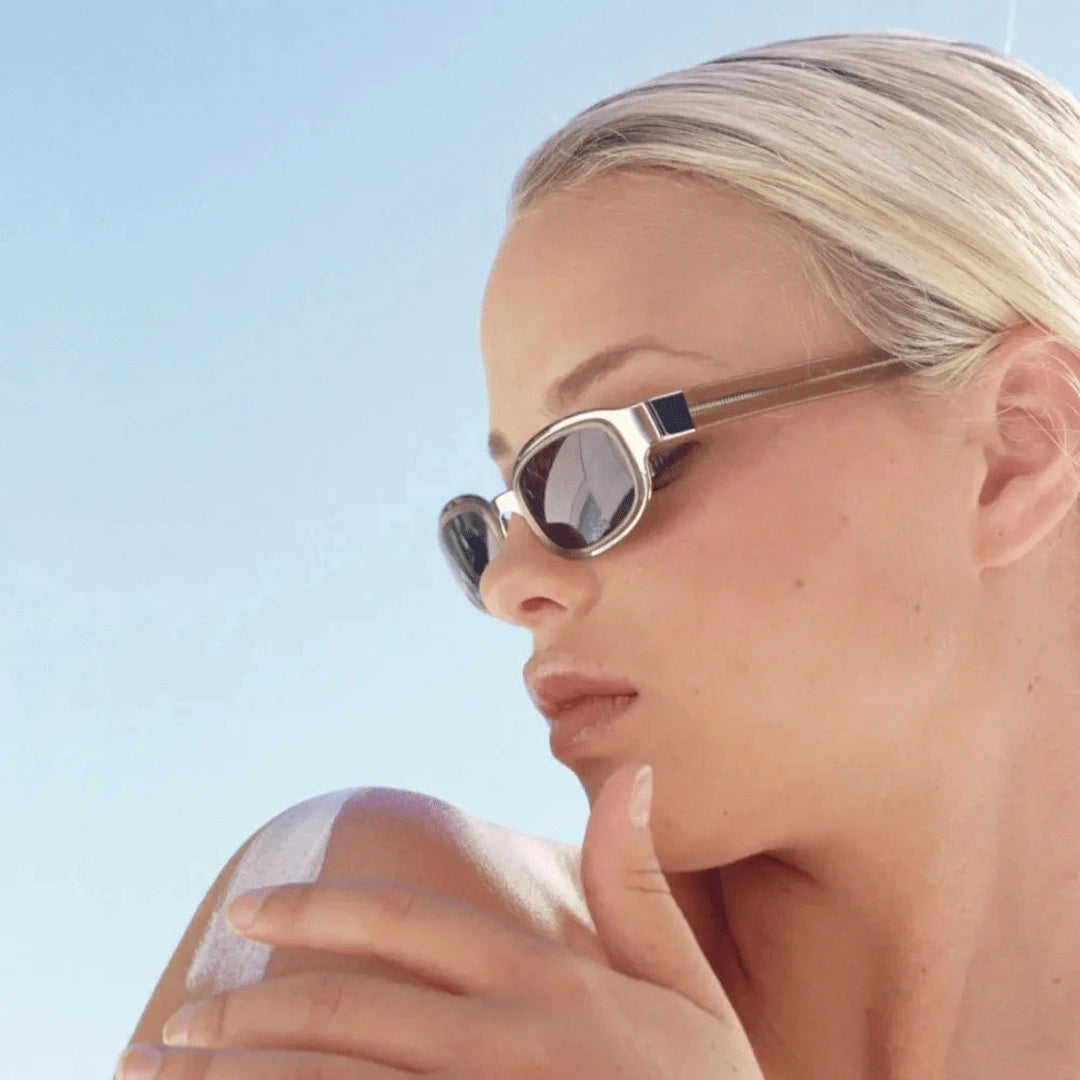
UV-protective sunglasses: for children and adults. Look for lenses rated UV400 or marked as providing 100% UVA and UVB protection.
-
UPF-rated clothing or a beach cover-up: for extended poolside or beach time, a UPF-rated cover-up reduces total UV exposure without requiring constant reapplication.
-
Check expiry dates before you pack: sunscreens carry a PAO (Period After Opening) symbol on packaging, shown as an open jar with a number. A product stored in a hot bag across multiple trips may not be performing as labelled.
Seek shade during the strongest sun of the day, typically between 11 am and 3 pm. SPF is one layer of protection, not the whole picture.

Application: what actually makes a difference
A few simple habits make a real difference to how well your sunscreen works:
-
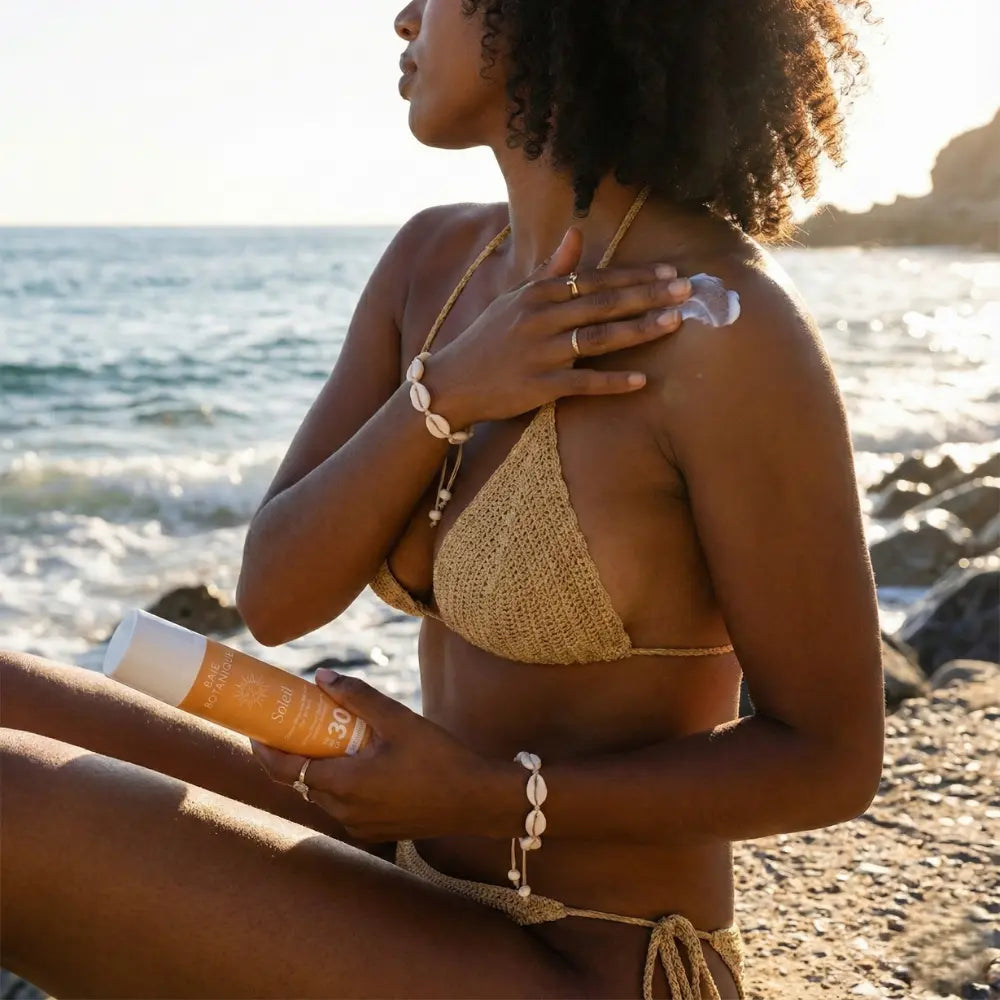
Apply before sun exposure, not in the sun. Mineral sunscreens work on the skin surface and need a few minutes to settle before you start exposure. Warm the product between your fingers to help it apply evenly.
-
Cover the areas that get missed. The hairline, tops of ears, back of the neck, backs of hands, and tops of feet are the most consistently overlooked areas. So are the eyelids. On beach days, the top of the head deserves a hat.
-
Use enough. The face and neck together typically need around half a teaspoon. For the body, around 6 to 8 teaspoons covers an adult fully. Using too little sunscreen reduces its protective power.
-
Do not rely on SPF in foundation or moisturiser as your primary protection. SPF 15 in a base product is a useful supplement, but not a substitute for dedicated sunscreen, especially in high UV conditions.
Reapplication: the part most commonly skipped
Reapplication is the part of sun care that most often gets skipped on holiday. Morning application alone is not enough.
-
Every two hours outdoors: reapply throughout the day, following the product directions. This applies on overcast days and in full sun.
-
After swimming or water activities: reapply each time, even if the product is labelled water resistant. Water resistance is not the same as waterproof.
-
After sweating or towelling: pat dry carefully and reapply straight away.
-
At or before lunch outdoors: if you are eating outside, use it as a reapplication prompt. It is an easy habit to build into the day.

The specific scenarios that catch people out
A few situations tend to catch families out:
-
Travel days: long outdoor transfers, open-top bus tours, boat trips, and excursions involve hours of sun exposure that people rarely think of as sun exposure. If you will be outside for an extended period, treat it like a beach day.
-
Snorkelling and water sports: being in the water doesn't protect you from UV. The upper back, back of the neck, and back of the legs receive direct overhead sun throughout water activities. A rash vest provides meaningful physical protection here.
-
Altitude: if your trip includes any mountain element, UV increases with elevation. This applies equally to ski trips, highland drives, and volcano walks, regardless of the temperature.
-
Reflected UV: sand, water, pale stone, and snow all reflect UV toward exposed skin. Shade from an umbrella does not eliminate reflected UV from the surface beneath you.
The checklist is not complicated. Following it, even when the sun doesn't feel intense, makes the difference.
Source
-
World Health Organization. (2002). Global Solar UV Index: A Practical Guide. WHO Press, Geneva. — UV index by latitude and season; UV behaviour under cloud cover.
-
Diffey, B.L. (2002). Human exposure to ultraviolet radiation. Methods, 28(1), 4–13. — UVA penetration and reflected UV.