Article: SPF 30 or SPF 50: Which Sunscreen Should You Pack for a Family Holiday?
SPF 30 or SPF 50: Which Sunscreen Should You Pack for a Family Holiday?
In October, it is a fair question: do we still need the SPF? The light is different. The days are shorter. The risk of burning is genuinely lower in the UK. For families heading somewhere sunnier this half term, and for the youngest members of those families, the question deserves a slightly more considered answer.
What actually changes about UV in October
The UV picture in autumn is genuinely different from summer. As the sun sits lower in the sky, UVB radiation, which is primarily responsible for sunburn, declines significantly. October in the UK carries a much lower burning risk than July, and that difference is worth acknowledging.
UVA remains present year-round, passes through cloud cover, and reaches the skin even on overcast days. As a rough guide: October in the UK tends to sit at the lower end of the UV scale, while further south, in destinations like the Algarve, October can look quite different. How different it is depends on where you are, what the UV index says that day, and how much time you spend outside.
Where you are heading changes the calculation
Half term is one of the busiest periods for UK family travel. The destinations that make most sense in late October, including the Canary Islands, southern Portugal and coastal Spain, still see meaningful UV in October, well above what you would encounter on a grey UK afternoon. For extended outdoor time, that is enough to make sun protection worth packing.
A few conditions worth keeping in mind:
-
Altitude: UV is stronger at altitude, and meaningfully so at ski resort elevations. Add reflected UV from snow, and the outdoor picture changes considerably, even when the air feels cold.
-
Reflective surfaces, sand, water, and pale stone, bounce UV back toward the skin. Beach and poolside conditions increase effective exposure beyond what the sky alone suggests.
- Cloud cover: Light cloud reduces but does not eliminate UV. Some of the most significant sun exposure occurs on overcast beach days, when the brightness feels manageable but UV still gets through.

Why the half-term context is different from a typical October day at home
The question isn't just about UV levels in isolation, but how those levels interact with the time you actually spend outdoors. A typical UK October day might involve the school run, some time in the park, and an afternoon inside. A half-term holiday involves long mornings at the beach, afternoons by the pool, or hours on a mountain walk.
Duration of outdoor exposure matters as much as UV intensity. A UV index of 4 over a three-hour morning on a sandy beach represents meaningful cumulative exposure, particularly for young skin. The holiday context, not just the season, makes the difference. That shift in setting is exactly what seasonal readiness means in practice.
Why younger skin warrants extra consideration
Young children's skin is more delicate than adult skin and does not yet produce the same level of natural UV protection. Evidence also shows that UV exposure in the early years contributes to cumulative changes over a lifetime, which is why paediatric sun safety guidance tends to take a more cautious position for children than for adults.
This is not a reason for alarm. Most half-term holidays involve exactly the kind of relaxed outdoor time that is good for children. Sun protection is one part of getting that time right, alongside shade during peak hours where possible, appropriate clothing, and practical judgement about conditions. Take it seriously for the same reason you wear a helmet on the slopes—not because danger is likely, but because a small precaution can make an already great experience even better.
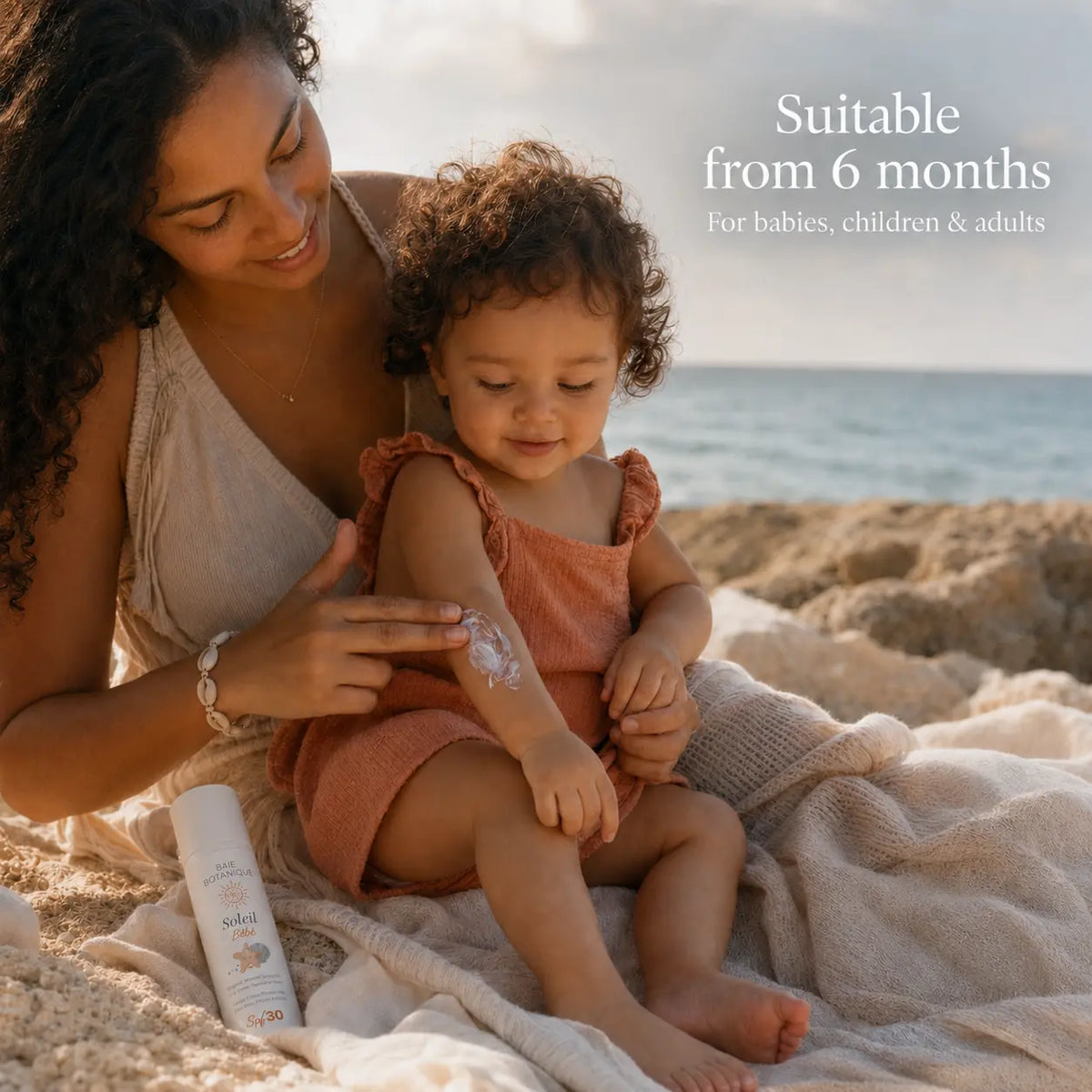
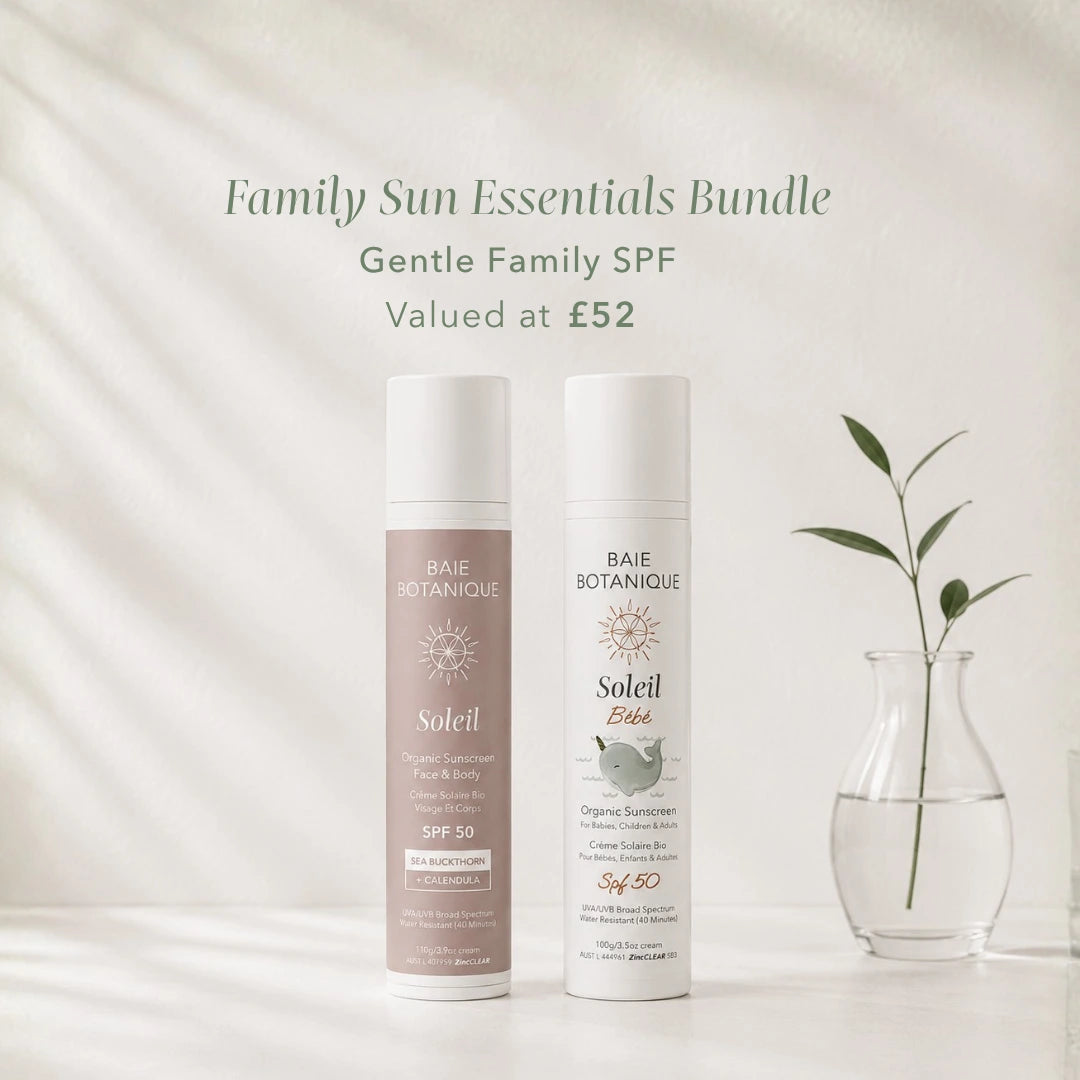
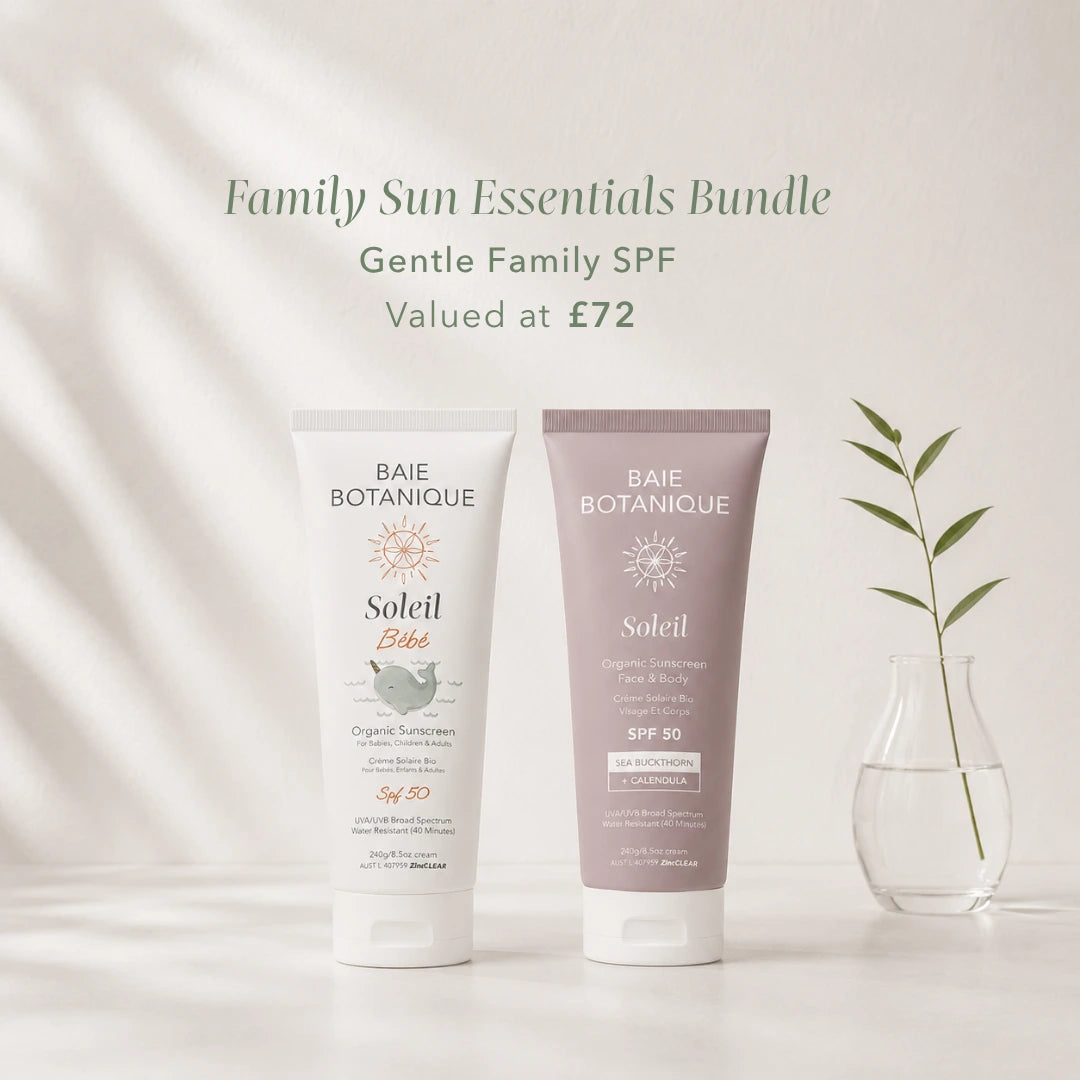
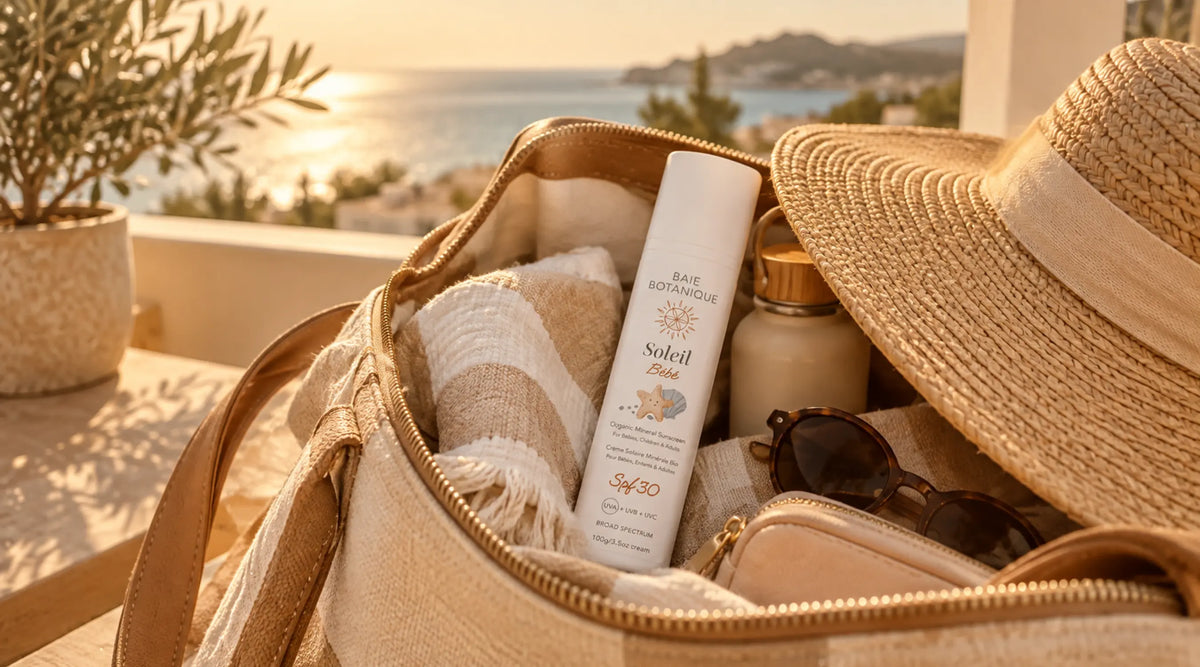
For babies under six months, the guidance is a little different. Sunscreen is not generally recommended at this age, so the safer approach is to keep them out of direct sun altogether: shade, a wide-brimmed hat, and lightweight covering clothing do what sunscreen would otherwise do for an older child. The Organic Mineral Sunscreen Baby & Children SPF 30 and SPF 50 formulas are suitable from six months, once sunscreen becomes an appropriate part of the routine.

Which baby sunscreen should you pack?
Not every day of a half-term trip calls for the same sunscreen, and the two Baie Botanique Baby & Children options suit different parts of the trip. Which one makes sense on a given day comes down to where you are, the UV index, what you will be doing, and how long you will be outdoors, rather than the time of year on its own.
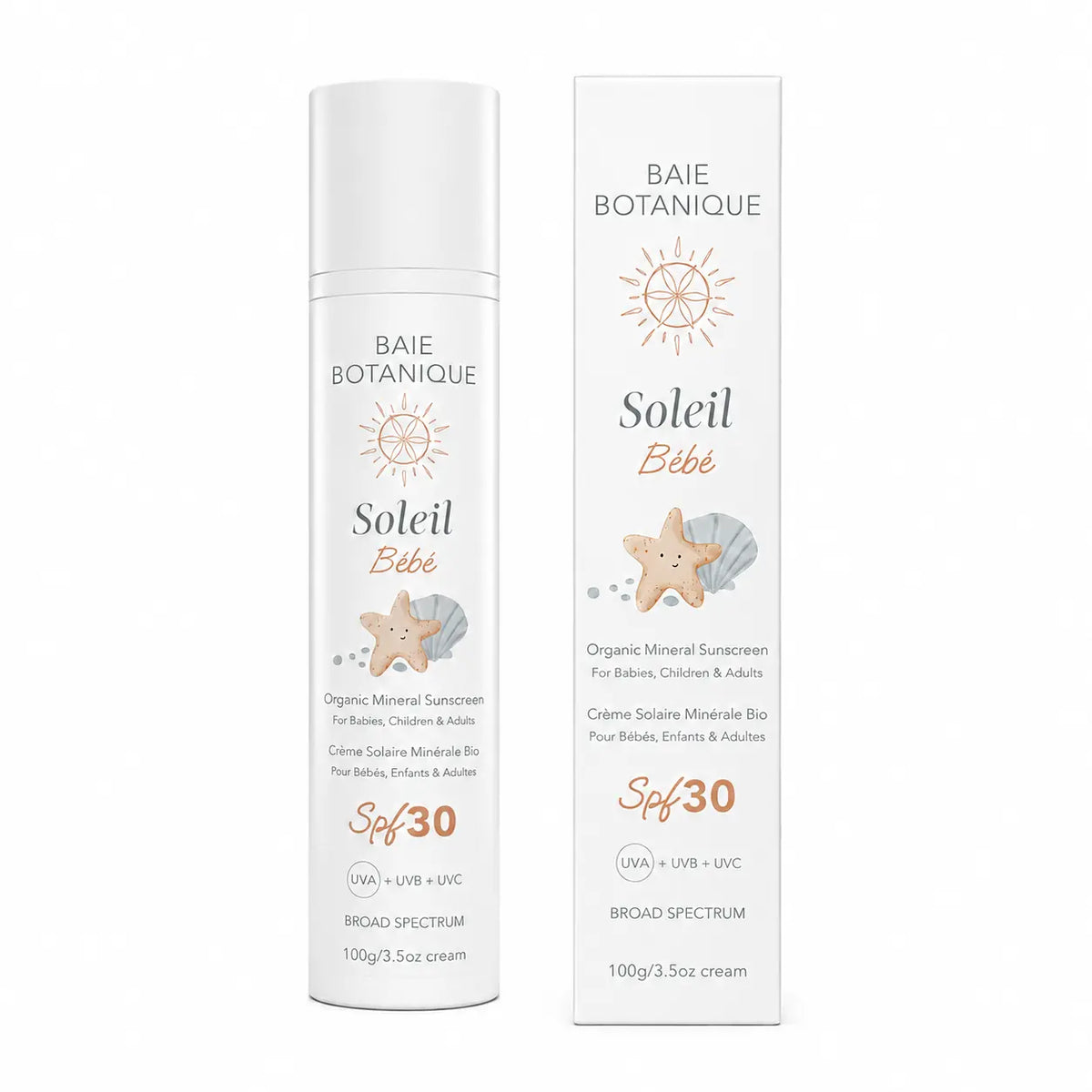
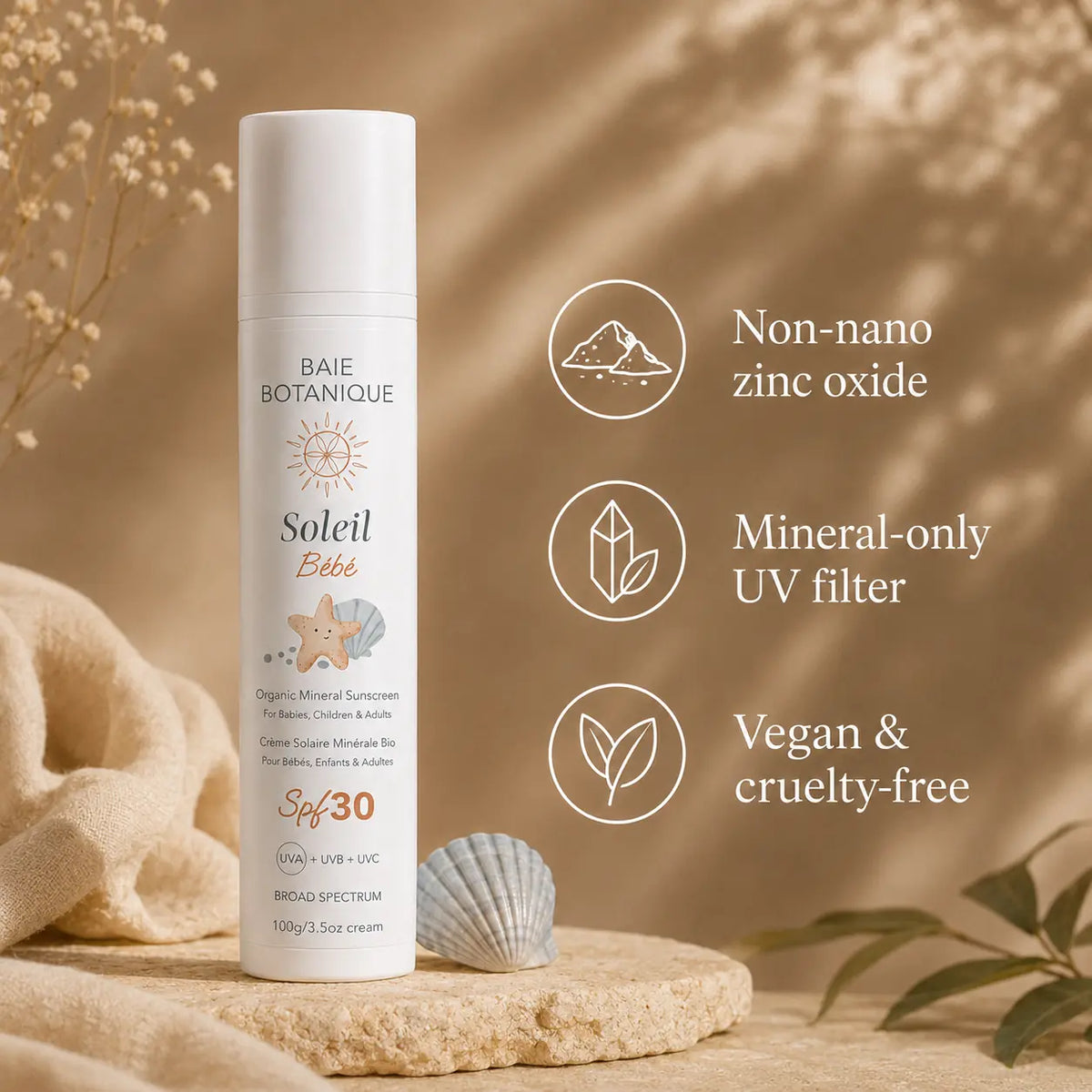
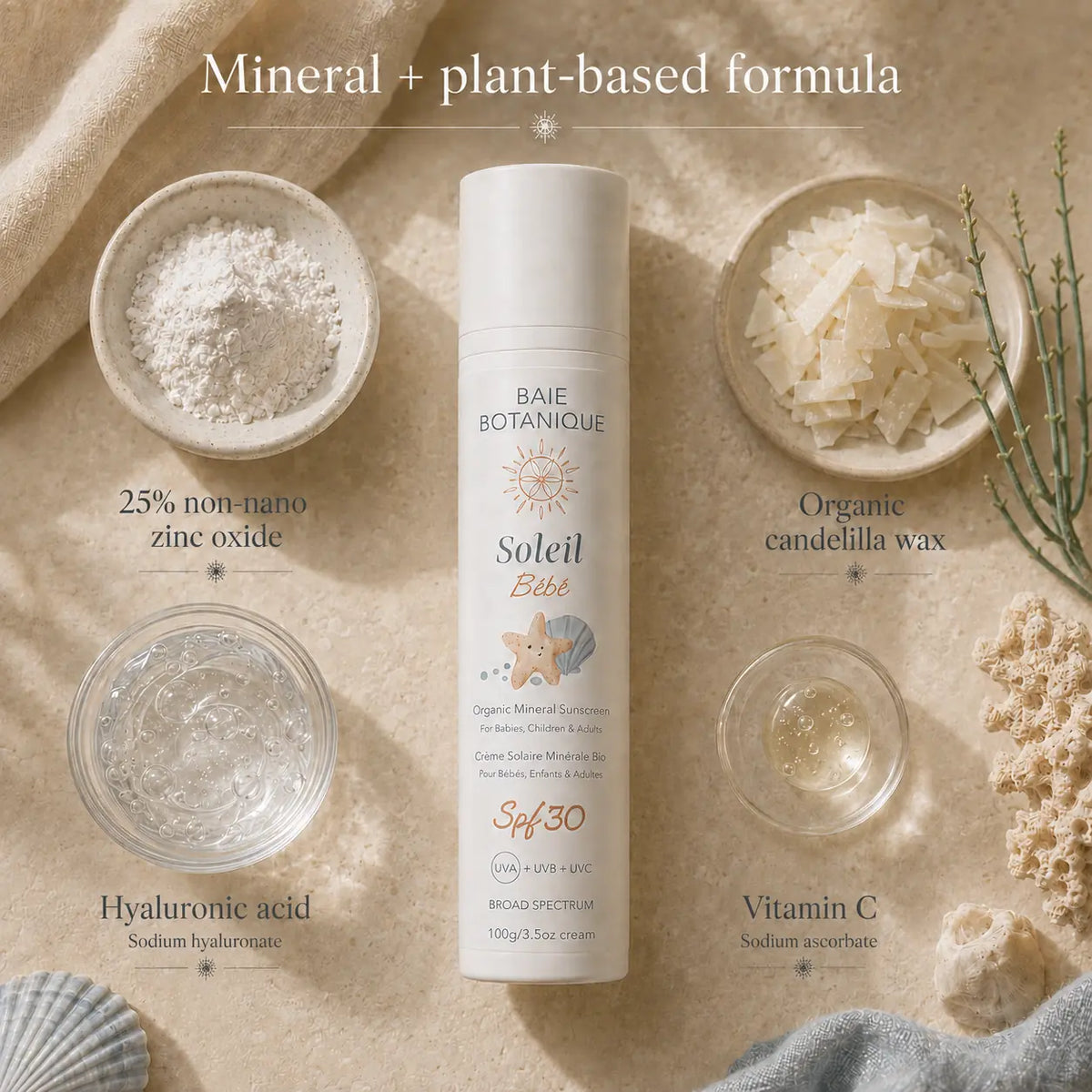
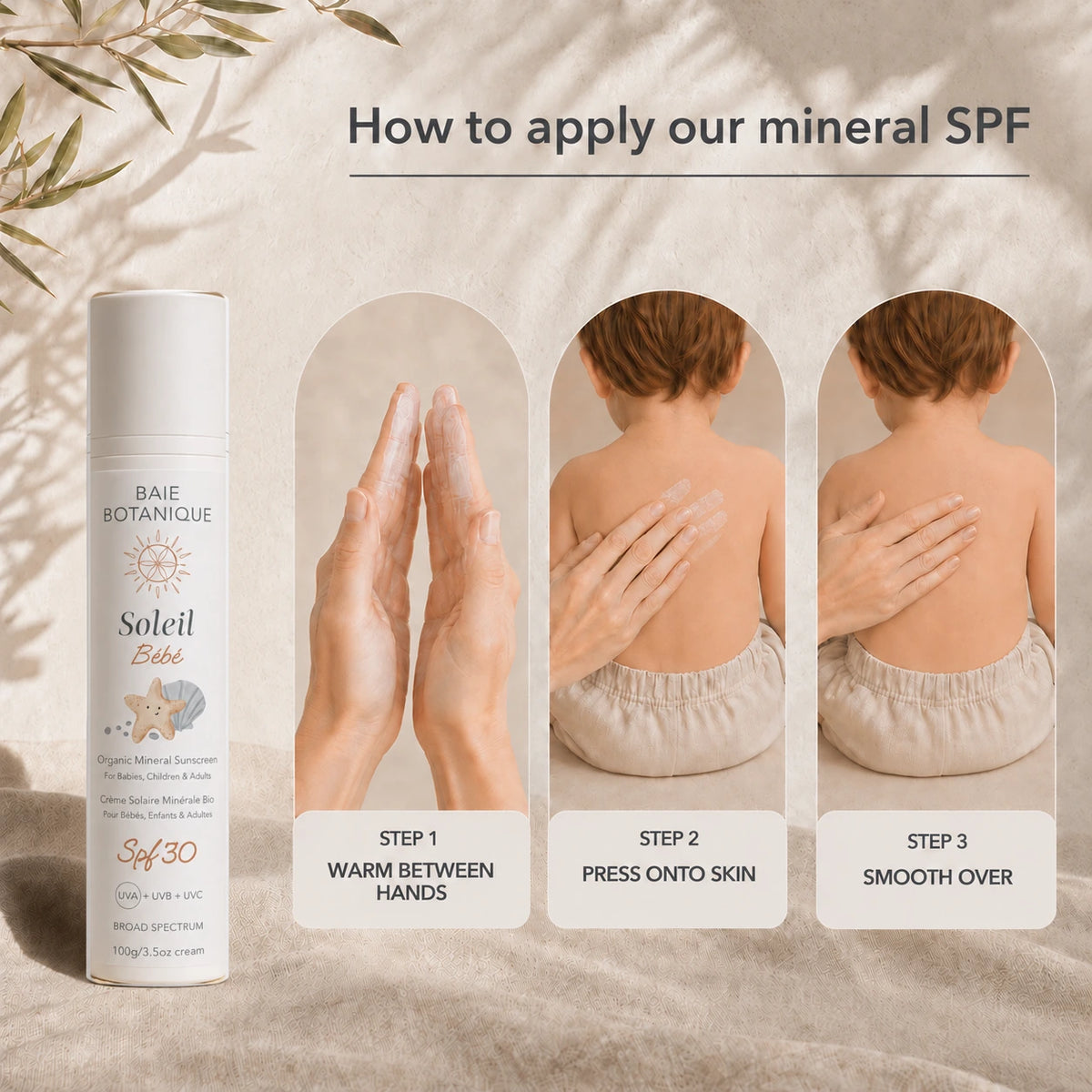
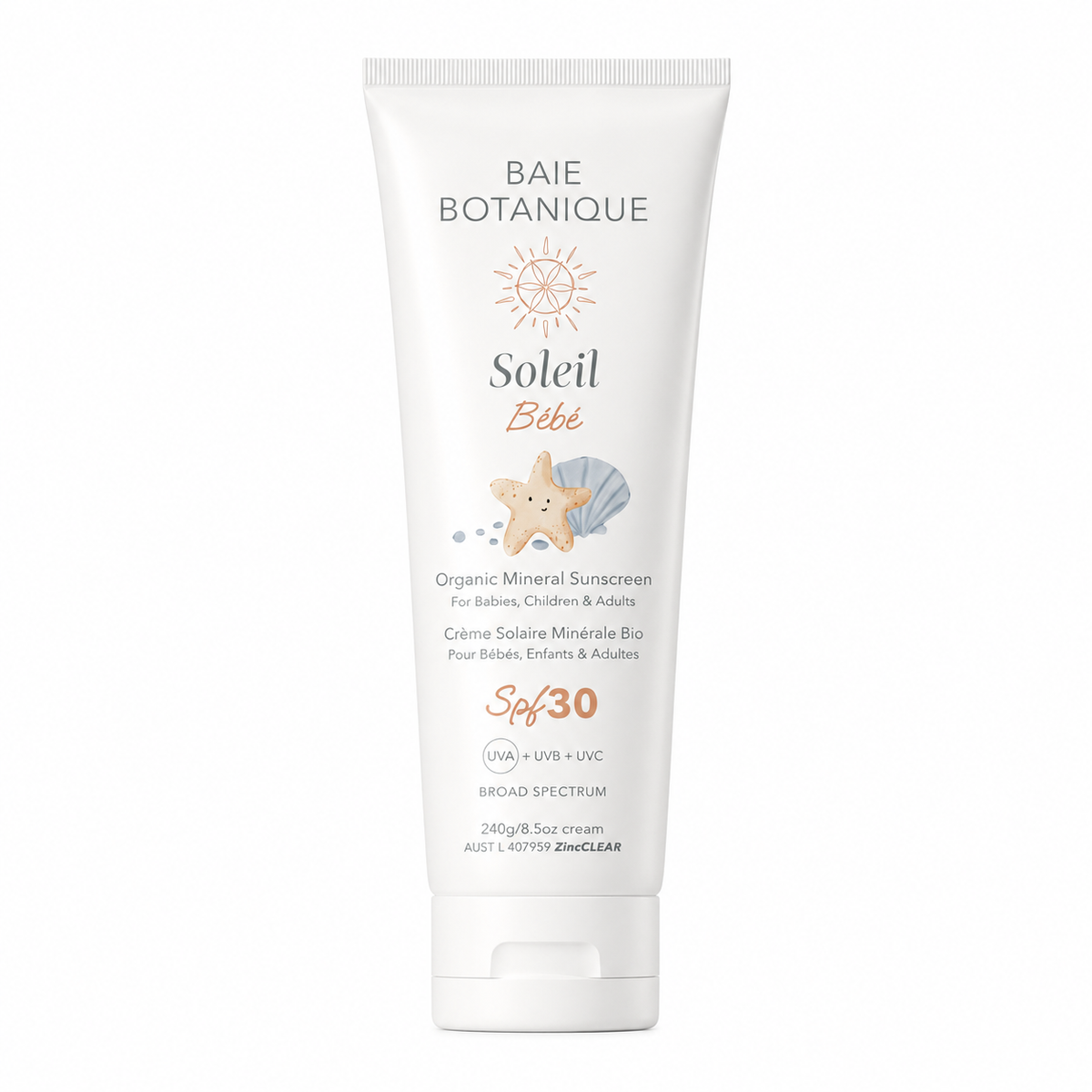
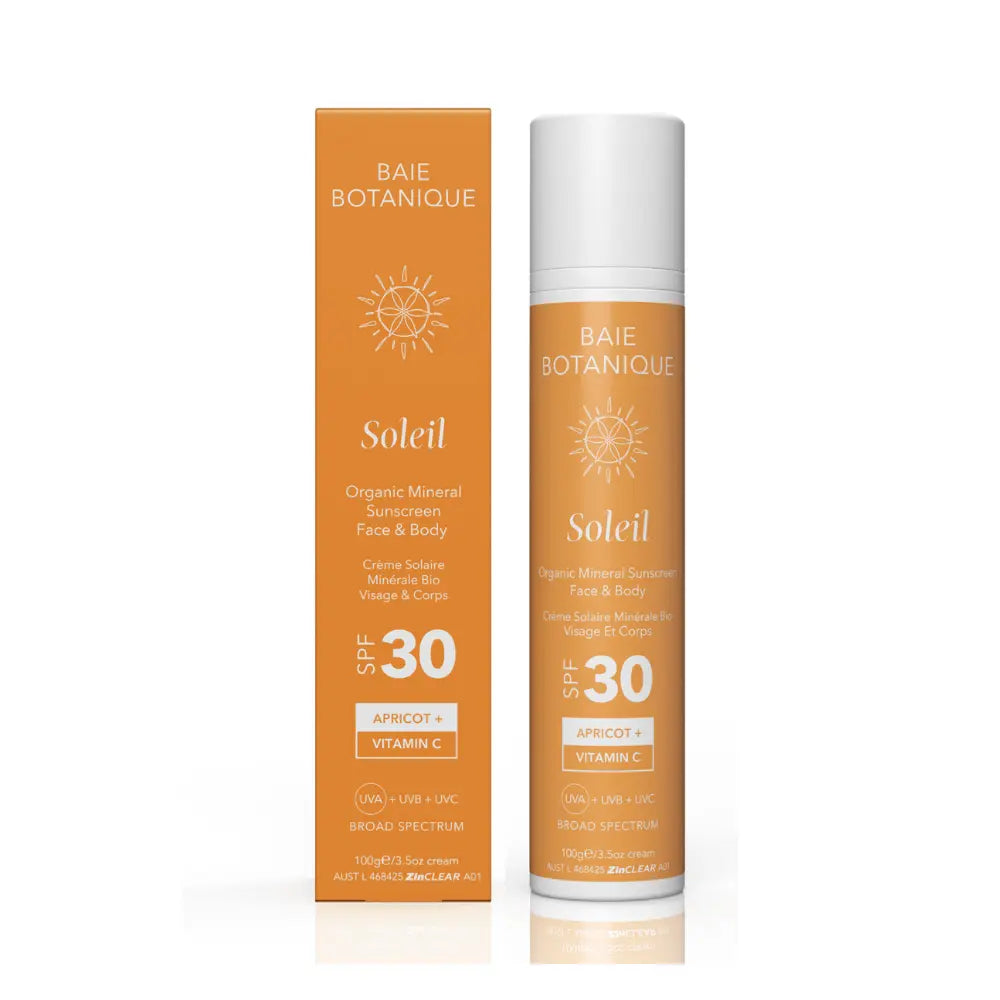
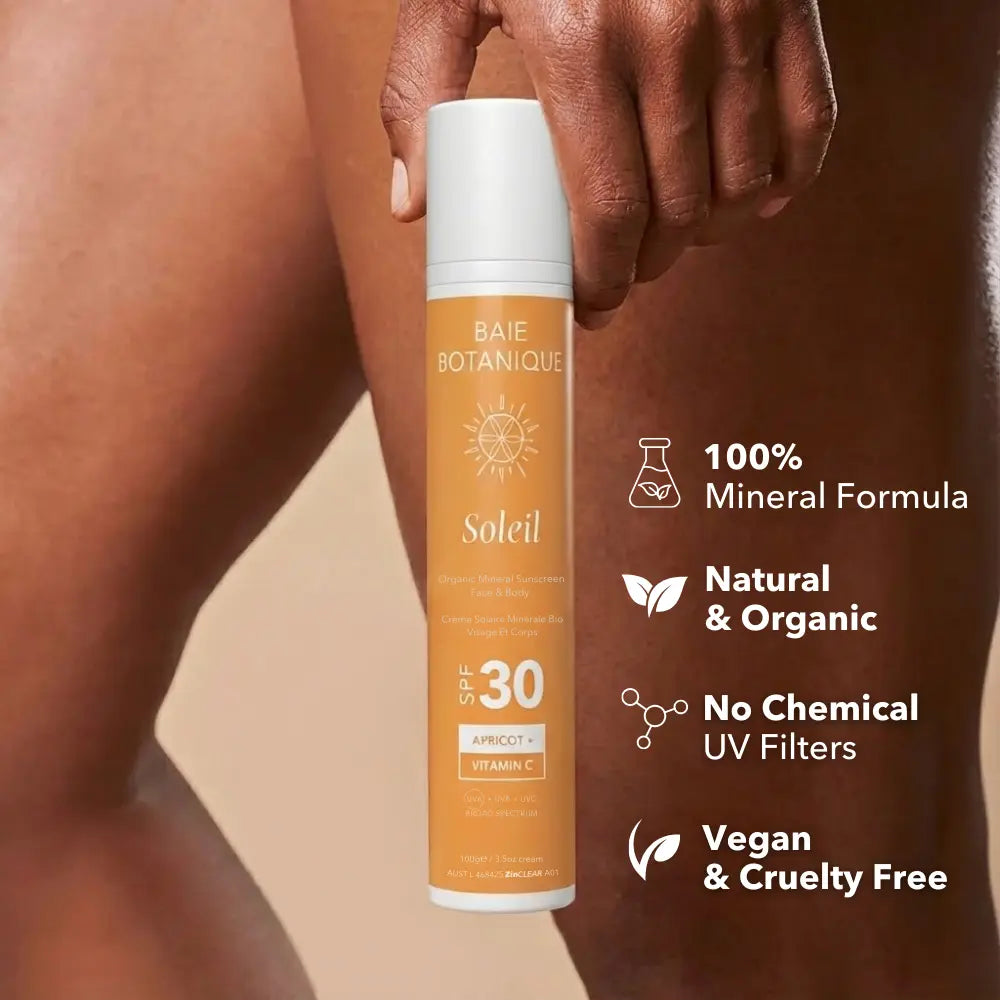
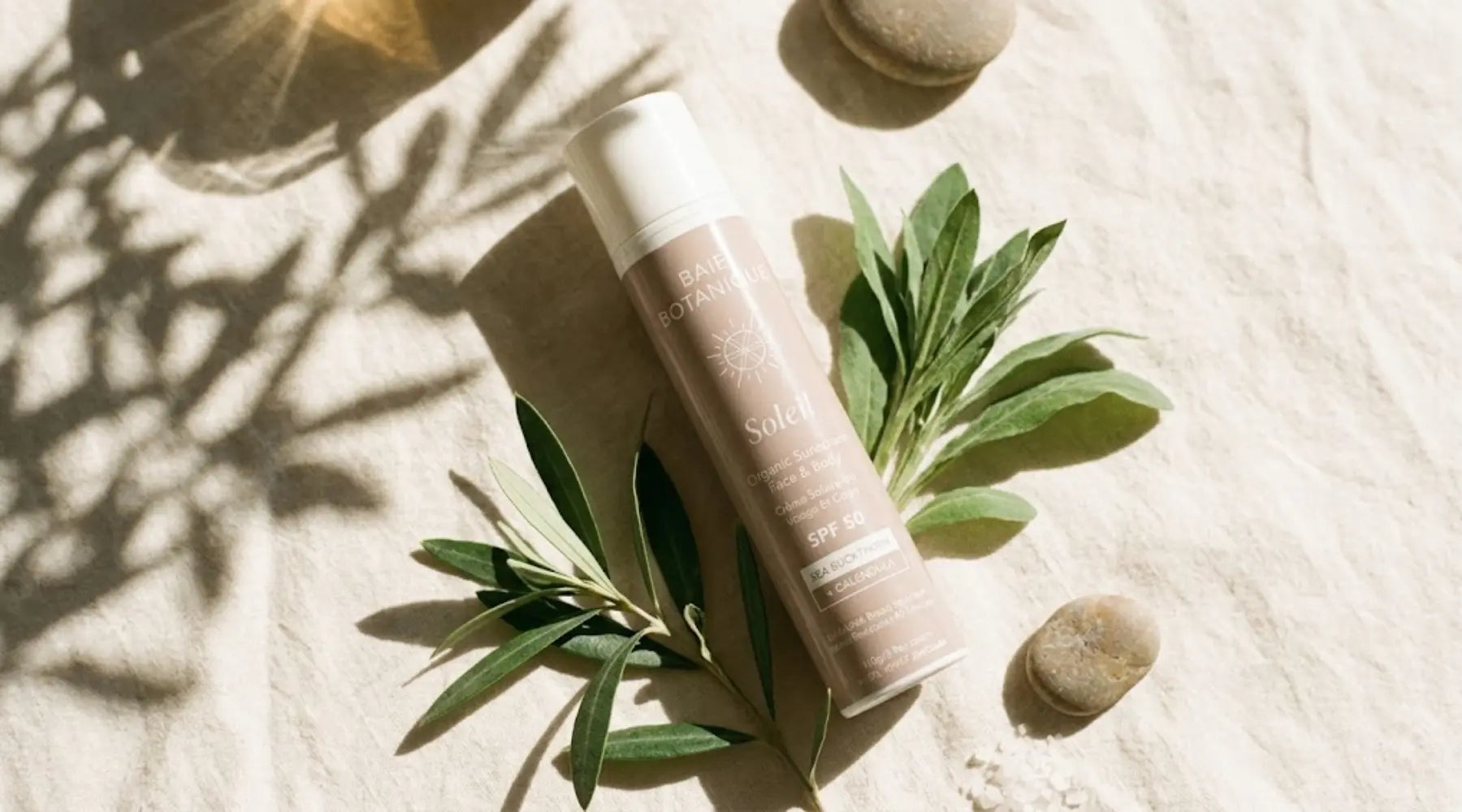
The Organic Mineral Sunscreen Baby & Children SPF 30 uses 25% non-nano zinc oxide as its mineral UV filter. It suits sunny, mainly dry holiday days: a morning at a market, a walk into town, a garden or terrace afternoon, time spent outdoors without water or heavy sweating involved.
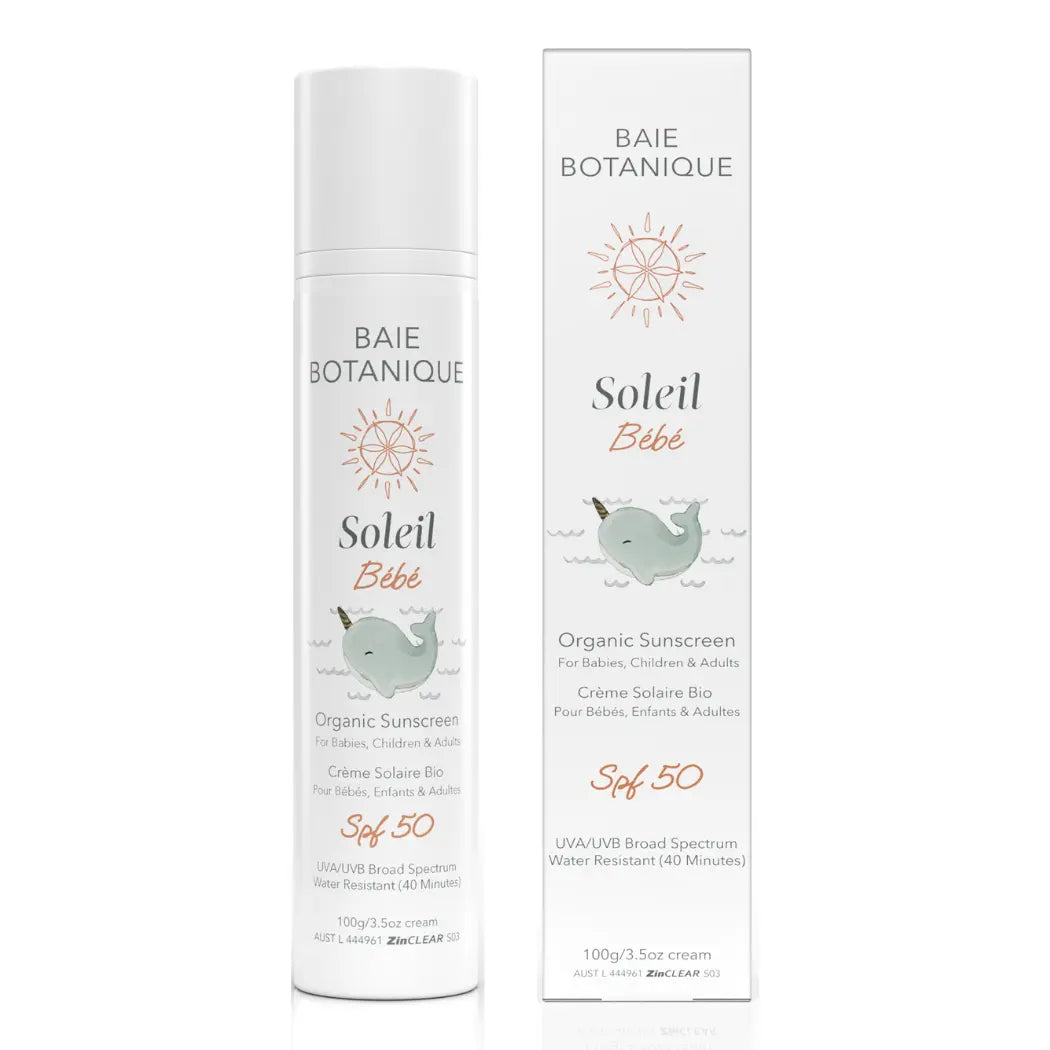
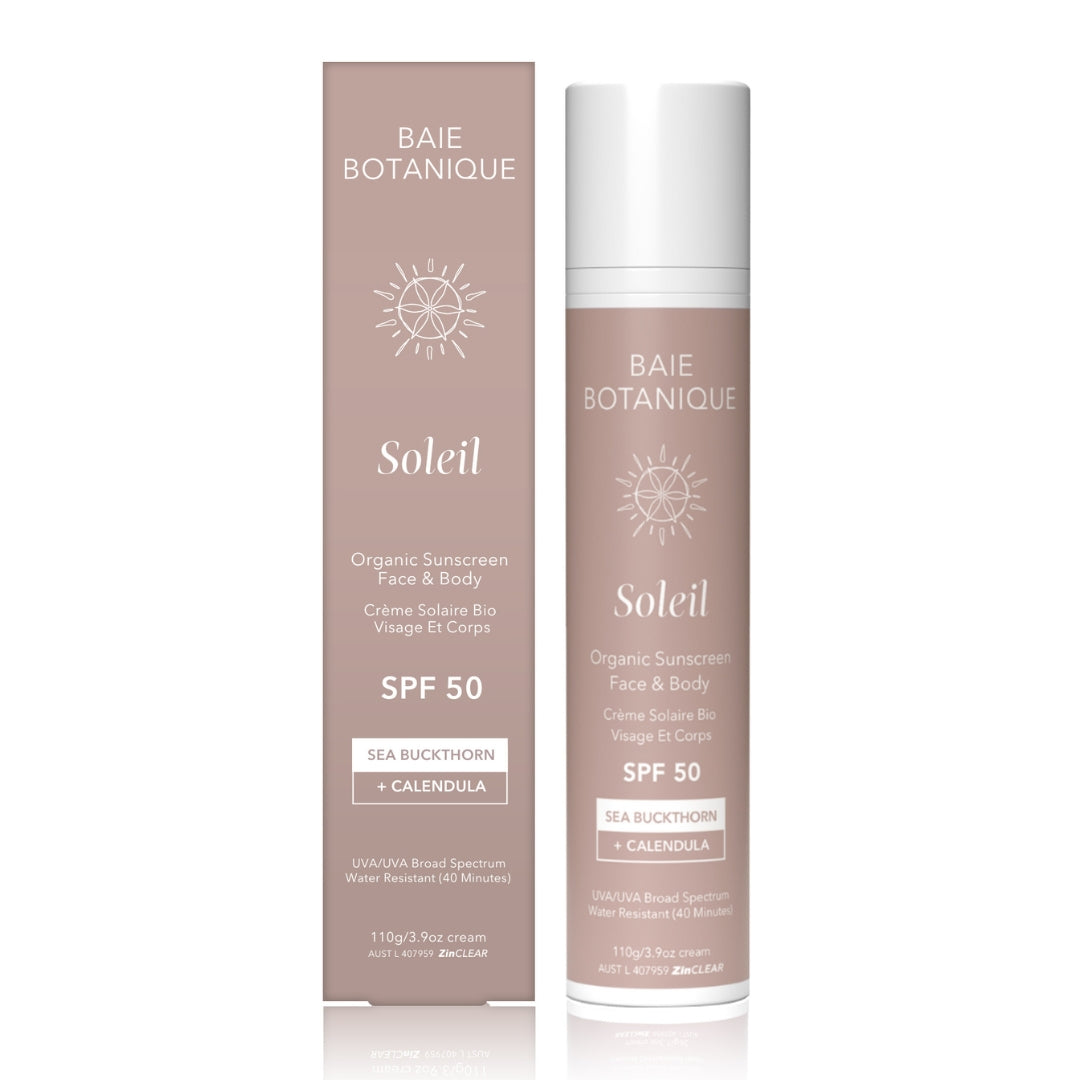
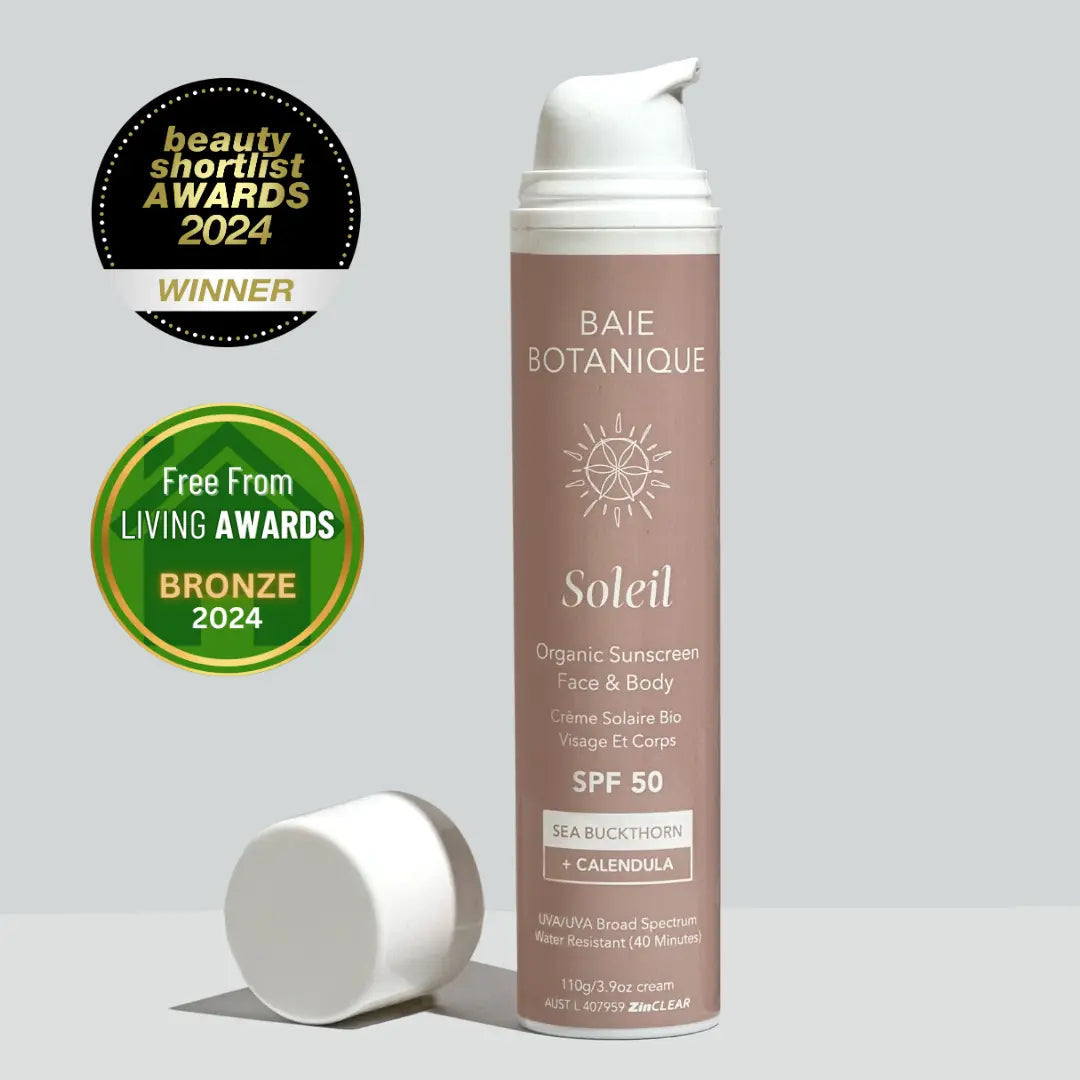
For anything wetter or more active, the water-resistant Baby & Children SPF 50 is the better fit: beach mornings, pool afternoons, sea swims, or any stretch of the day where water or sweat could compromise protection. That water resistance, along with the higher SPF, is exactly what those conditions call for.
Packing both covers the trip, so you don't have to guess which one a given day needs.
How to use it
A few practical points for half-term use:
-
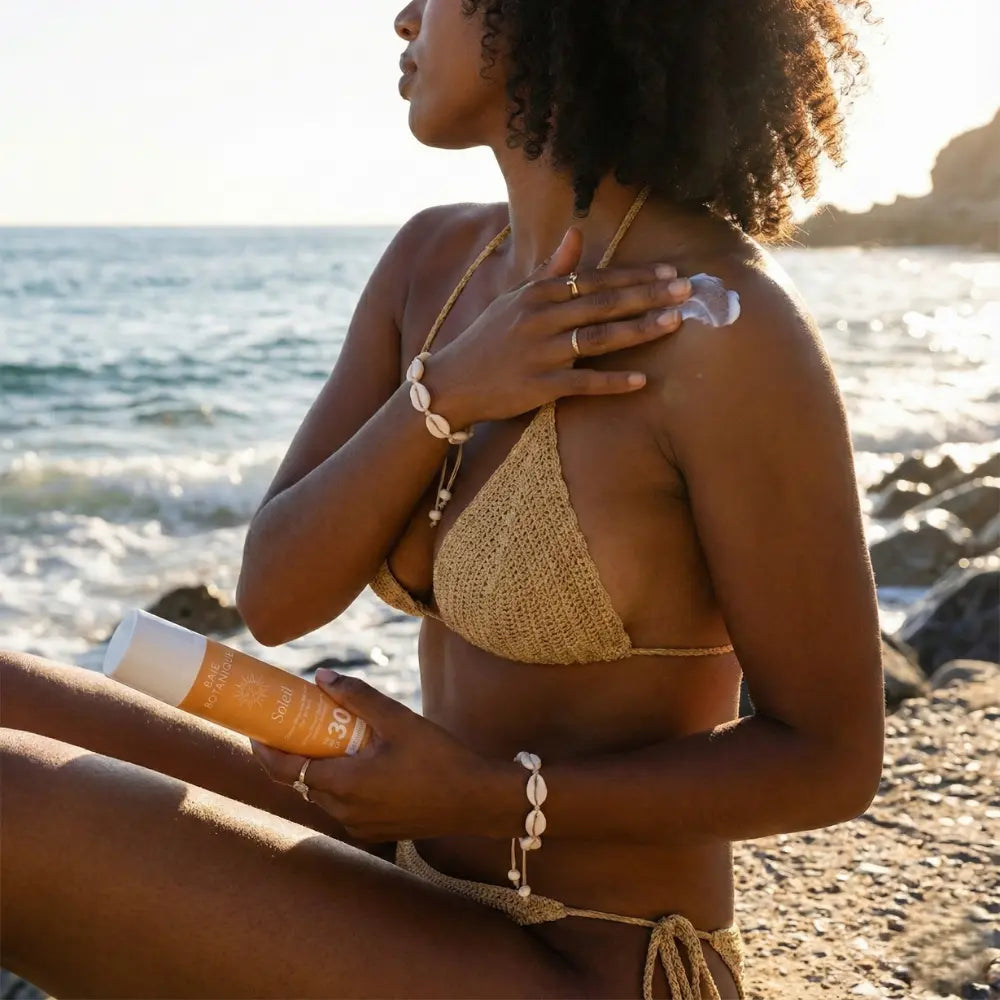
Apply generously before heading outside, at least 15 to 20 minutes before sun exposure begins.
-
Follow the directions on the product itself: reapply at least every two hours, and straight after swimming, sweating, or towelling dry, whichever comes first.
-
For a day involving water, sweat, or extended high-exposure activity (swimming, the beach, a pool, higher altitude in strong sun), reach for the water-resistant SPF 50 instead.
-
Keep it accessible in the changing bag rather than packed away, so using it becomes a natural part of getting ready to go out.
The half-term bag is always full. This is one thing worth making room for.
Sources
-
World Health Organization. (2002). Global Solar UV Index: A Practical Guide. WHO Press, Geneva. — UV intensity at altitude, latitude, and reflective surfaces.
-
Diffey, B.L. (2002). Human exposure to ultraviolet radiation. Methods, 28(1), 4–13. — UVA and UVB characteristics and transmission through cloud and glass.
-
Armstrong, B.K. & Kricker, A. (2001). The epidemiology of UV-induced skin cancer. Journal of Photochemistry and Photobiology B: Biology, 63(1–3), 8–18. — Cumulative UV exposure from childhood and skin changes in later life.