
What a Summer Holiday Actually Does to Your Skin (And How to Help It Recover)
There is a familiar pattern after a summer holiday. For a day or two, your skin looks like it has been given the best possible treatment: warmed, rested, perhaps a little rosy. Then something shifts. It feels tight when you cleanse, dry in places it does not usually get dry, or suddenly more reactive to the products you use every day.
This is not your skin turning on you. It is your skin asking for a slightly different kind of care. Understanding what has happened during a holiday makes the recovery process considerably more straightforward, and considerably less expensive.
Four Things Summer Travel Does to Your Skin
A holiday asks a lot of the skin barrier, and it does so quietly, across several different fronts at once.
-
UV exposure: even under a well-applied sunscreen, UV radiation reaches the skin and stimulates a physiological response. Melanocytes produce more pigment as a protective mechanism, the skin's inflammatory pathways are subtly activated, and the outermost layer works harder to manage the exposure. The visible effect of this often appears not on holiday, but several weeks after.
-
Dehydration: heat, salt water, and high temperatures all accelerate transepidermal water loss (TEWL), the rate at which moisture evaporates from the skin's surface. Air conditioning and air travel compound this further. Skin that appears to be simply dry after a holiday is often primarily dehydrated.
-
Salt water and chlorine: both are significantly disruptive to the skin's lipid matrix, the fatty layer that keeps the barrier intact and moisture locked in. Repeated exposure without a considered rinse-and-moisturise routine depletes these lipids gradually.
-
Disrupted sleep and travel stress: changes in time zones, sleep quality, and routine elevate cortisol levels, which measurably impairs the skin barrier's ability to maintain homeostasis and recover from daily stressors,
None of this is a case for not going on holiday. It is simply useful context for what your skin is managing in the background while you are managing everything else.

What Your Skin Is Telling You When You Get Home
Post-holiday skin signals are easy to misread. Here is what the most common ones actually mean:
-
Tightness after cleansing: the barrier's lipid layer has been depleted and is struggling to retain moisture. This is a dehydration and barrier signal, not a sign of dirty or congested skin.
-
New breakouts: a combination of sweat, sun protection products, a change in water quality, and diet shifts can temporarily affect the skin microbiome and pore behaviour. This usually settles on its own within a week or two.
-
Pigmentation appearing: the melanocyte response to UV exposure can take several weeks to surface as visible pigmentation. Dark spots that appear in August and September are often the result of UV exposure from weeks earlier.
-
A general dullness: the accumulation of sun-exposed surface cells, combined with dehydration, tends to flatten the skin's natural luminosity. Gentle, infrequent exfoliation once skin has stabilised can help here, but the first priority is always hydration and barrier repair.
What Post-Holiday Recovery Actually Looks Like
The instinct to reach for a targeted treatment or a stronger active is understandable after a holiday. It is also, almost universally, the wrong move. What skin needs first is consolidation, not correction.
-
Simplify for one to two weeks: set aside exfoliating acids, retinoids, and high-concentration vitamin C. These are valuable ingredients, but they require an intact barrier to work without causing irritation. Introducing them when the barrier is already compromised tends to increase sensitivity rather than improve results.
-
Cleanse gently, once daily: if skin is feeling reactive, reduce cleansing to once a day in the evening. A low-pH cleanser that respects the acid mantle will not strip the lipid layer further. Morning rinsing with cool water is sufficient for most people in this recovery phase.
-
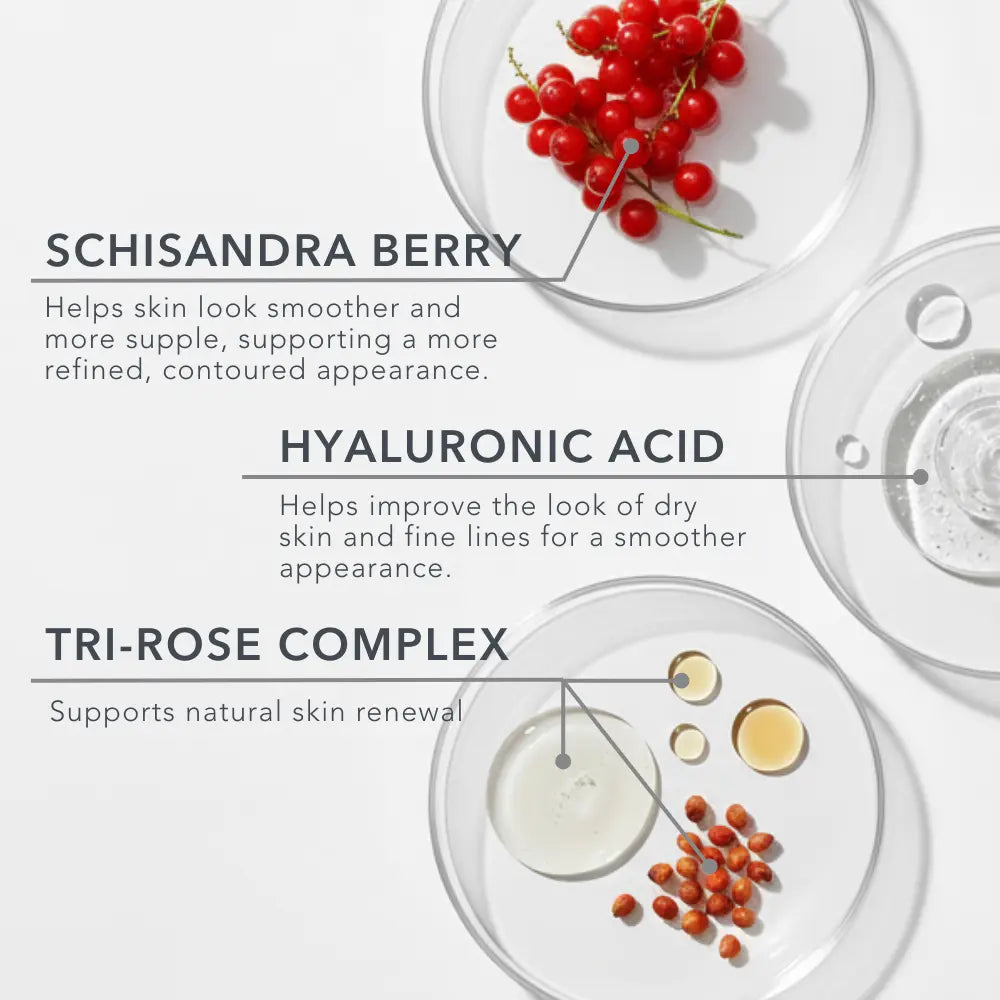
Prioritise hydration and barrier ingredients: the most effective post-holiday routine centres on ceramides (which restore the barrier's lipid matrix), humectants like hyaluronic acid (which draw water back into the skin), and plant-based oils rich in linoleic acid, such as rosehip seed oil, which the skin uses directly in barrier repair.
-
Keep SPF going in the morning: UV does not stop at the airport. Late-summer and early-autumn UV levels remain meaningful, particularly UVA radiation, which penetrates more deeply and is present at significant levels year-round. Sun protection in the morning continues to be worthwhile.

When to Reintroduce Your Usual Routine
Most skin returns to its baseline within one to two weeks of focused recovery, though the timeline varies depending on how much sun exposure there was and how intact the barrier was beforehand. The signal to look for is comfort: skin that feels calm and balanced after cleansing, with no tightness or reactivity, is generally ready to welcome more active ingredients back in.
When reintroducing, start with one product at a time. This makes it considerably easier to identify anything that is not agreeing with post-holiday skin, and avoids the compounding reaction that comes from introducing several new variables at once.
A Note on Patience
It takes the skin longer to recover from the cumulative effects of a summer holiday than it does to acquire them. This is not a flaw in the system. The skin is a living structure, and it works on its own timeline. The most effective thing you can do in the weeks after a holiday is provide it with the right ingredients consistently, and leave it some space.
Most of the changes you notice in September, whether pigmentation or sensitivity or texture, are not permanent. They are the skin doing its job: processing, adjusting, and finding its balance again. A simpler routine, done consistently, will help it do exactly that.
Source
-
Chamlin, S.L., Kao, J., Frieden, I.J., Sheu, M.Y., Fowler, A.J., Fluhr, J.W., Williams, M.L., & Elias, P.M. (2002). Ceramide-dominant barrier repair lipids alleviate childhood atopic dermatitis. Journal of the American Academy of Dermatology, 47(2.